- The Rundown Robotics
- Posts
- Agility’s $2.5B humanoid hits Nasdaq
Agility’s $2.5B humanoid hits Nasdaq
PLUS: Apple’s first robot faces another delay


Jennifer Mossalgue, Rowan Cheung, Shubham Sharma & Zach Mink
November 05, 2026

Good morning, robotics enthusiasts. Oregon startup Agility Robotics, maker of the tote-hauling humanoid Digit, lists on Nasdaq today at $2.5B.
That’s around 1,400x its 2025 revenue, and more than half of those sales came from five robots sold to one investor. Can Digit earn enough on the warehouse floor to justify that price?
In today’s robotics rundown:
Agility takes Digit to Wall Street
Apple’s $1K robot faces another delay
China blocks SoftBank’s $5.4B robot takeover
Xiaomi humanoids log eight factory hours
LATEST DEVELOPMENTS
AGILITY

Image source: Agility Robotics
The Rundown: Digit has spent years hauling totes in warehouses and auto plants. Today, its maker Agility lists on Nasdaq as AGLT, the first U.S. humanoid pure play, valued at $2.5B pre-money on $1.8M of 2025 revenue.
The details:
Digit 5, unveiled in Sept., stands 5'11", lifts 50 lb. repeatedly, and recharges in 9 minutes, enough for 20+ hours of work a day.
The humanoid is built to work next to people without barriers, and Agility says it’s the first humanoid to go through a field evaluation against OSHA standards.
The company went public via a SPAC merger with Churchill Capital Corp XI, which is expected to bring $465M before expenses, including $100M in the bank.
Agility lost $138.1M and burned $99.8M in operating cash in 2025. Five robots bought by a single investor made up over half its revenue.
Why it matters: Agility now has to publish quarterly numbers in a sector where rival Figure was valued at $39B while still private. Its biggest contract covers 1K robots over three years, and its RoboFab plant in Salem, Oregon, is designed to build 10K a year. Next, Agility plans to bring Digit 5 to the EU and UK in 2027.
APPLE

Image source: Apple (HomeView)
The Rundown: Apple has reportedly had its first home robot in development for about two years, but the hard part has been turning a swiveling screen into an AI that acts on its own. The Information reports that it’s now pushing the launch to 2027 or later.
The details:
The hardware is apparently mostly done: J595 is reportedly a 9-inch screen on a swiveling robotic arm designed to turn toward people during calls.
Apple reportedly wants the device to understand who and what is around it, react autonomously, and control parts of the smart home.
The company is targeting 2027 at around $1K or more, though software delays could push the launch into 2028, according to the report.
Apple has also reportedly explored mobile, flying, and chore-focused household robots, though those concepts appear much further from market.
Why it matters: As Ars Technica notes, the reported features — like following you on FaceTime or switching on lights — look “underwhelming” next to existing smart home gear, or even a basic robot vacuum. That makes $1,000+ a hard sell. J595 could ship as “HomeView Ultra,” alongside Apple’s new HomeView display.
ABB ROBOTICS
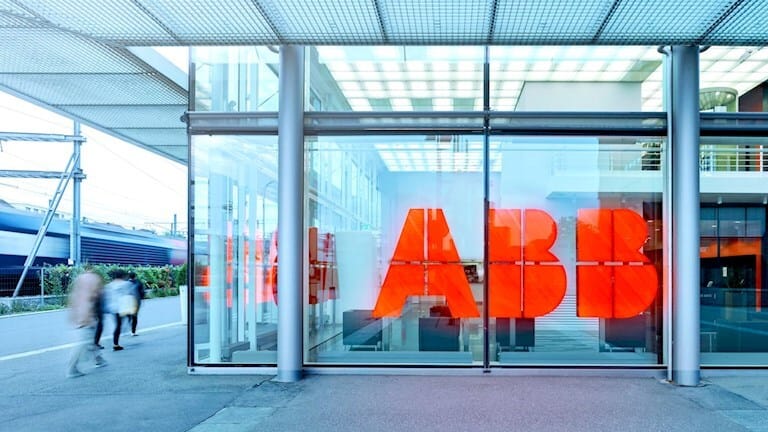
Image source: ABB Robotics
The Rundown: Beijing just barred SoftBank from buying ABB’s robotics business in China — the unit’s biggest market — reportedly over fears that data from its factory robots could leave the country and train AI models abroad, OpenAI’s included.
The details:
China’s foreign-investment security review office blocked the China leg of the $5.4B deal, ABB confirmed Thursday.
Regulators reportedly worried robot data could end up training AI models abroad, including OpenAI’s, where SoftBank is a major investor.
China makes up about 30% of ABB’s robotics business. ABB also builds robots and runs an R&D center at a $150M factory in Shanghai, open since 2022.
Why it matters: The deal would have routed ABB’s factories and customers into SoftBank’s physical AI holdings, Skild included. Coming after China’s intervention in Meta’s Manus takeover in April, this block means future robotics deals involving Chinese operations could also face scrutiny over who gets to buy and use the data.
XIAOMI

Image source: Xiaomi / X
The Rundown: Xiaomi posted an impressive video on X of two full-size humanoids logging eight cumulative hours sorting car parts at its EV factory in China, its longest published factory run so far.
The details:
The demo features two humanoids moving center-console side covers from bins into racks; Xiaomi says its robots can also correct anomalies autonomously.
The eight hours come from a cumulative work-time counter, posted at 100x speed. At one break, Xiaomi’s on-screen status card reads “charging.”
Xiaomi hasn’t disclosed how many parts were sorted, the success rate across the shift, how often humans stepped in, or which anomalies the robots catch.
Figure says Figure 02 worked 10-hour shifts at BMW and loaded 90K+ parts, while Boston Dynamics’ Atlas demoed parts sorting at Hyundai’s U.S. EV plant.
Why it matters: Eight hours of autonomous, self-correcting factory work is a serious achievement, but Xiaomi still hasn’t shown output or intervention numbers. Electrek argues the wheeled robot helper spotted in the demo could be the more practical design: wheeled humanoids with room for bigger batteries, no walking needed.
QUICK HITS
Figure’s F.03s are walking out of the factory: A new video from CEO Brett Adcock shows them crossing campus, months after the company said it built its 1,000th unit.
Boston Dynamics’ new Stretch robot, which unloads trucks, is built to break down less, with an 81% reduction in internal cabling and a full swerve-drive swap now taking about one hour rather than a full day.
Baidu said its new Apollo World simulator, used to train its Apollo Go robotaxis, can generate up to 100K km of simulated driving per day with camera and lidar streams.
Shield AI built its first full-scale X-BAT prototype in a year, an AI-piloted fighter jet built to fly without a runway. Testing is next, and production is targeted for 2029.
China’s robotics boom is reportedly slowing down, with funding falling to $1.6B in Oct. — 67% below June’s peak — as worries grow that some companies won’t survive.
Waymo will reportedly end Uber’s exclusivity in Austin and Atlanta in Jan. 2028, adding bookings through its own app while potentially remaining on Uber.
A soft robotic exosuit that assists scuba divers’ kicks has cut air use by up to 30% in tests, potentially buying them more time underwater.
BMW will expand its SAE Level 2 driver-assistance system into German cities in 2027, adding navigation-guided support for turns, lane changes, and right-of-way situations.
Nearly 90 teams competed with robots on China’s Mount Tai this week, in the inaugural World Robot Mount Tai Climbing Competition.
MIT researchers developed a system that helps robots detect and correct mistaken memories of objects by comparing images from different angles.
Read our last AI newsletter: AI agents can now make your phone calls
Read our last Tech newsletter: Apple can’t build enough iPhone Duos
Read our last Robotics newsletter: Meta builds its first humanoid robot
Today’s AI tool guide: Which free AI tool should you actually use?
RSVP to next workshop on Nov. 11 with Nate: Use Claude to its full potential
That's it for today!Before you go we'd love to know what you thought of today's newsletter to help us improve The Rundown experience for you. |
See you soon,
Rowan, Zach, Shubham, Jennifer, and Nate — The Rundown’s editorial team