- The Rundown Robotics
- Posts
- DJI pays $30K for mass robot vacuum hack
DJI pays $30K for mass robot vacuum hack
PLUS: Wing delivery drones work the night shift


Jennifer Mossalgue, Joey Liu, Rowan Cheung, Shubham Sharma & Zach Mink
March 09, 2026

Good morning, robotics enthusiasts. DJI is paying a French hobbyist $30K after he accidentally hijacked thousands of Romo robot vacuums — and the live camera feeds and microphones that came with them.
A single cloud permission flaw turned a wacky PlayStation controller experiment into an accidental mass surveillance incident. Patches are out, but the bigger question lingers: can we ever make smart devices truly private?
In today’s robotics rundown:
DJI pays $30K for robot vacuum hack
Alphabet’s delivery drones now work nights
Ex-Googler launches robotics startup in Tokyo
Tesla’s Full Self-Driving hits 8B miles
Quick hits on other robotics news
LATEST DEVELOPMENTS
DJI

Image source: Ideogram / The Rundown
The Rundown: DJI is reportedly paying $30K to the French hobbyist who accidentally seized control of 7K Romo robot vacuums, flagging a bug that turned an AI-assisted weekend hack into a global home‑surveillance scare.
The details:
Sammy Azdoufal accidentally gained remote access to 7K robot vacuums worldwide while trying to control his own unit with a PlayStation controller.
The flaw let him tap into live camera feeds, microphones, and detailed home floor maps from strangers’ devices via DJI’s cloud infrastructure.
After he reported the issue and it went public, DJI pushed rapid backend fixes and automatic updates, saying the main vulnerabilities are now patched.
DJI has agreed to pay Azdoufal $30K, positioning it as a bug-bounty style reward and vowing more third-party security audits and certifications for Romo.
Why it matters: This story is a test of how much trust we put in AI-powered gadgets that can see, hear, and map our homes, in the same line as Roomba test vacuums leaking intimate photos and Ring cameras letting strangers talk to kids in their bedrooms. It’s more proof that one bad cloud permission can go terribly wrong at scale.
WING
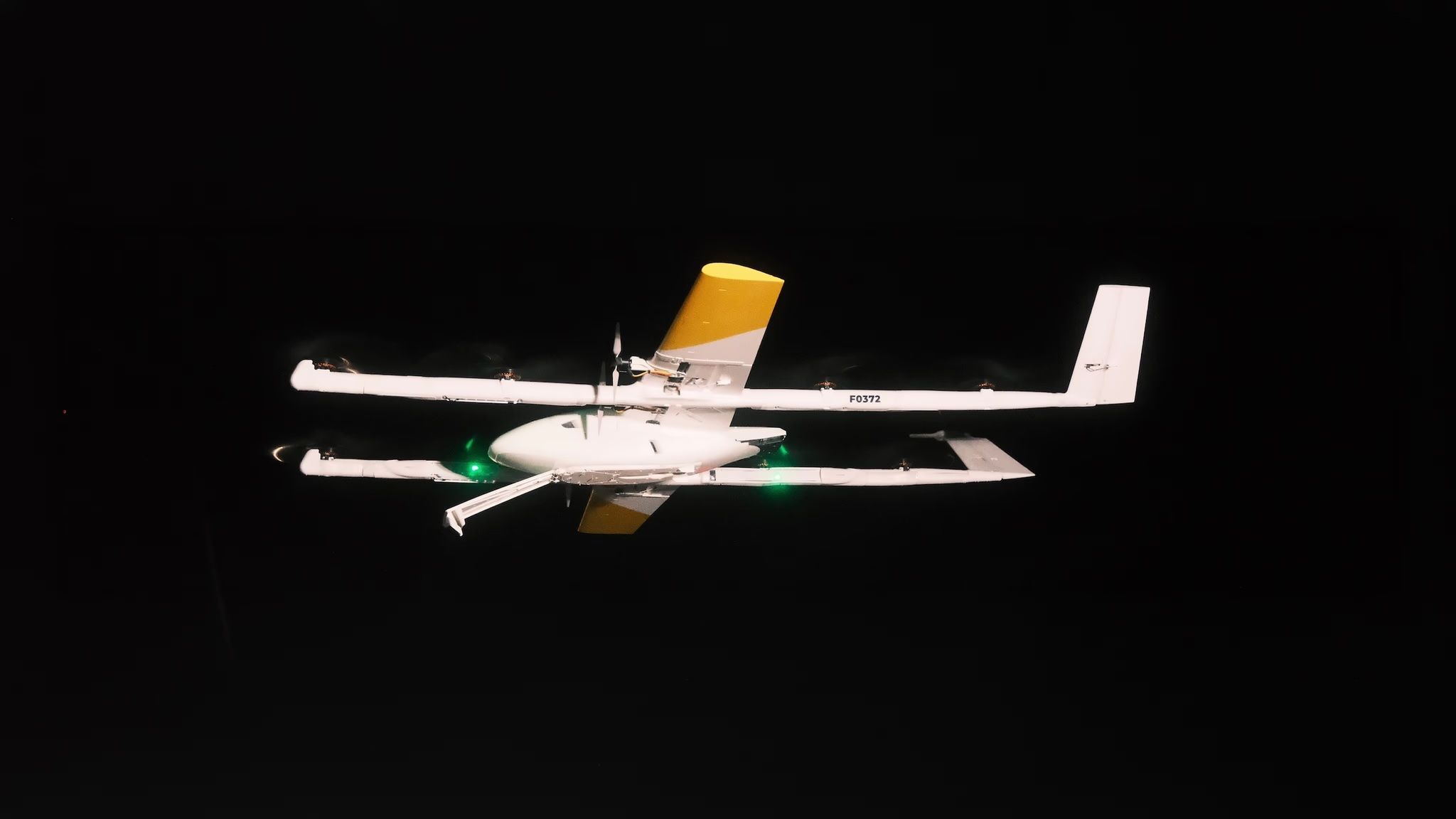
Image source: Wing
The Rundown: Alphabet’s Wing just won the FAA’s approval to extend its drone delivery hours to 9 p.m. in parts of Dallas–Fort Worth and Charlotte, pushing on-demand aerial logistics firmly into the evening routine.
The details:
Alphabet’s Wing now has FAA approval to run drone deliveries after sunset, extending operations into nighttime hours.
Wing’s service for Walmart and DoorDash customers runs from 9 a.m. to 9 p.m. at select sites in the Dallas–Fort Worth metroplex and the Charlotte region.
The drones use near-infrared “headlights” to see in the dark without adding visible light pollution, and can still pick safe landing spots, avoiding obstacles.
Rival Zipline has now crossed 2M commercial deliveries, while Wing has logged roughly 350K drops and aims to cover 270 Walmart stores by 2027.
Why it matters: Amazon and Zipline are also chasing drone delivery at scale, but approvals for fully automated, after-dark flights are still rare enough that each new waiver quietly resets the bar for everyone else. Knowing when Wing slips into the night shift is also a useful tell for how fast regulators are loosening the reins.
INTEGRAL AI

Image source: Integral AI
The Rundown: Ex-Google researcher Jad Tarifi is turning Integral AI from a split SF–Tokyo business into a Tokyo‑first startup, betting Japan’s factory‑robot giants are the fastest way to put his AI “brains” into the real world.
The details:
Tarifi has built a 15-person startup in Tokyo to plug advanced AI models into Japan’s huge industrial robot ecosystem.
Integral AI has worked with auto parts giant Denso since 2021, using imitation learning so factory robots can pick up new tasks by watching human demos.
The company is in talks with Toyota, Sony, Honda, and Nissan to show how language prompts let robots teach themselves complex workflows on the fly.
Integral has raised about $5.5M so far and is seeking roughly $10M more to scale its models and launch its Genesis system later this year.
Why it matters: Japan controls a huge slice of the world’s industrial robots but still depends on foreign AI and cloud providers to run them, which is exactly the gap Integral AI is trying to fill. The company’s goal is to provide the “Silicon Valley brains” that sit on top of Japanese hardware to power next-gen factory automation.
TESLA
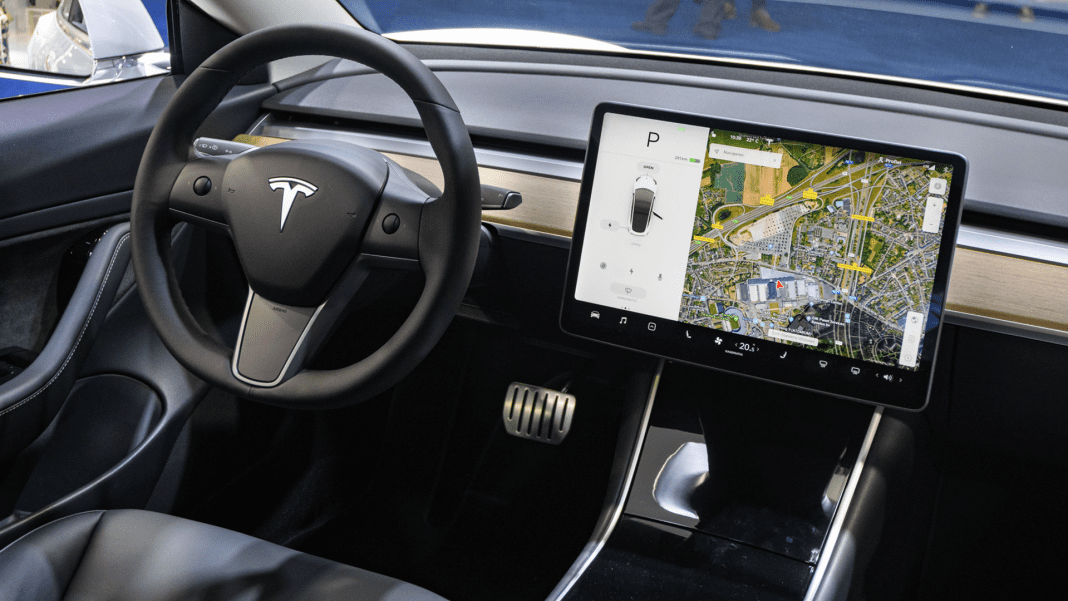
Image source: Tesla
The Rundown: Tesla’s Full Self-Driving (FSD) crossed 8B cumulative miles this year, a staggering data haul that inches Elon Musk’s long-promised robotaxi future closer to technical plausibility even as it remains stuck in regulatory and safety limbo.
The details:
Tesla is pursuing autonomy using a camera-only perception stack, in contrast to Waymo’s lidar sensors and detailed 3D mapping.
FSD has evolved into a supervised driver-assist suite that can change lanes, navigate routes, steer, park, and drive itself across parking lots to the owner.
The company’s expanding fleet, software rollouts, and periodic free FSD trials have accelerated usage from just 6M miles five years ago to billions today.
Musk has said about 10B miles of training data are needed to justify large-scale autonomous deployment, a threshold Tesla could hit within the year.
Why it matters: Tesla’s 8B FSD miles are huge, but those miles still come from a supervised Level 2 system rather than a true robotaxi network. That leaves Tesla with a massive data advantage over rivals in training volume, while Waymo retains the edge in fully driverless deployment, regulatory approval, and real-world commercial autonomy.
QUICK HITS
OpenAI’s robotics chief, Caitlin Kalinowski, resigned over what she says is a rushed, poorly safeguarded Pentagon deal to put the company’s AI on military systems.
A London surgeon remotely controlled a Toumai robot to remove a prostate 2,400 km away with only 48 ms latency, showcasing long-distance telesurgery’s viability.
The U.S. National Highway Traffic Safety Administration will host an autonomous vehicle safety forum on Tuesday with the CEOs of Waymo, Zoox, and Aurora.
Alphabet CEO Sundar Pichai’s new equity package, worth up to $692M over three years, is reportedly tied to boosting the valuations of Waymo and Wing.
Mirai Robotics raised a €4.2M ($4.9M) pre-seed round to develop autonomous maritime systems aimed at both civilian and defense applications.
Agility Robotics is dropping “Robotics” from its name to become Agility, saying the rebrand reflects its readiness to scale humanoid deployments and lead adoption.
Ukraine is rolling out remote-controlled and autonomous armed ground robots against Russian forces, raising fresh ethical and legal concerns about AI-driven warfare.
Dexterity introduced Foresight, a physics-consistent world model that powers its Mech robot to autonomously load trucks using a 4D box-packing agent.
Ouster said demand for its lidar-powered software is taking off, with 2025 orders doubling and its systems now booked for more than 1,200 sites worldwide.
China’s new 5-year plan doubles down on rare earths and advanced robotics to secure supply chains and keep its edge as a high-tech industrial powerhouse.
NASA’s 1.8-meter Valkyrie humanoid is heading back to Johnson Space Center after a decade at the University of Edinburgh.
China’s WeRide is deepening its partnership with Geely’s Farizon unit to mass-produce 2K upgraded GXR robotaxis in 2026.
COMMUNITY
Read our last AI newsletter: OpenAI's robotics lead exits over DoW deal
Read our last Tech newsletter: Meta sued over Ray-Ban privacy
Read our last Robotics newsletter: Waymo has a big problem in Austin
Today’s AI tool guide: Build an AI case study generator
RSVP to our next workshop Thursday @ 2PM EST: AI coding bootcamp pt. 1
That's it for today!Before you go we'd love to know what you thought of today's newsletter to help us improve The Rundown experience for you. |
See you soon,
Rowan, Joey, Zach, Shubham, and Jennifer — The Rundown’s editorial team