- The Rundown Robotics
- Posts
- Figure's humanoid cleans living room
Figure's humanoid cleans living room
PLUS: Uber and Zoox team up in Vegas


Jennifer Mossalgue, Rowan Cheung, Shubham Sharma & Zach Mink
March 12, 2026

Good morning, robotics enthusiasts. Figure’s humanoid just walked into a messy living room and actually cleaned it, sort of.
The Figure 03 robot sprayed surfaces with 409 (product placement?), sorted toys, and hunted down a TV remote, powered by the same neural controller behind its earlier kitchen demo. CEO Brett Adcock says it’s fully autonomous, but Elon Musk has questions.
In today’s robotics rundown:
Figure 03 can now clean living rooms
Uber adds Zoox robotaxis in Vegas
Inside China’s robot boot camps
Robot dolphin cleans up oil spills
Quick hits on other robotic news
LATEST DEVELOPMENTS
FIGURE

Image source: Figure
The Rundown: Silicon Valley robotics startup Figure’s latest demo shows its Figure 03 humanoid tidying a living room, using the same single neural controller from its earlier kitchen demo to manage new tools and textiles and clean as it goes.
The details:
In the clip, Figure 03 sprays and wipes a dirty surface with a towel, repositions that same towel over its shoulder, and resumes cleaning, albeit a bit awkwardly.
CEO Brett Adcock says the robot “performs whole-body, end-to-end living room cleanup” powered by the company’s in-house Helix 02 VLA model.
The robot handles complex two-handed behavior: it lifts a bin while scooping blocks into it, stashes items under one arm, and retrieves a TV remote.
Elon Musk publicly asked on X whether the demo was “autonomously or remotely operated” — Adcock replied it was “fully autonomous.”
Why it matters: If Figure can keep expanding Helix 02 with data instead of rewiring its robots every time the room changes, that’s a big point for the “one brain, many chores” thesis. But the field is split: 1X wants the same domestic endgame, Agility has real warehouse deployments, and Tesla’s Optimus hype still outruns its public demos.
ZOOX

Image source: Zoox
The Rundown: Amazon-owned Zoox plans to plug its steering‑wheel‑free robotaxis into the Uber app in Las Vegas later this year, if it can first convince U.S. regulators to let the purpose-built shuttles operate commercially.
The details:
The rollout hinges on regulators approving Zoox’s request for exemptions from multiple federal vehicle safety standards so the cars can operate commercially.
Zoox is already running limited, free public rides in Las Vegas and San Francisco, which it aims to convert into paid trips once approvals land.
The company will launch via its own app first, then feed vehicles into Uber under a multi‑year partnership that also targets LA in 2027.
The deal plugs Amazon’s AV unit into Uber’s huge rider base, putting Zoox up against Waymo and more than 25 other autonomous partners on the platform.
Why it matters: Zoox jumping onto Uber’s platform is an attempt to turn a long‑running R&D project into a real business, fast, by piggybacking on an existing ride‑hail giant. It also shows how robotaxi players may need to cooperate as much as compete, using shared platforms to chase scale while regulators decide how far to go.
CHINESE ROBOTICS
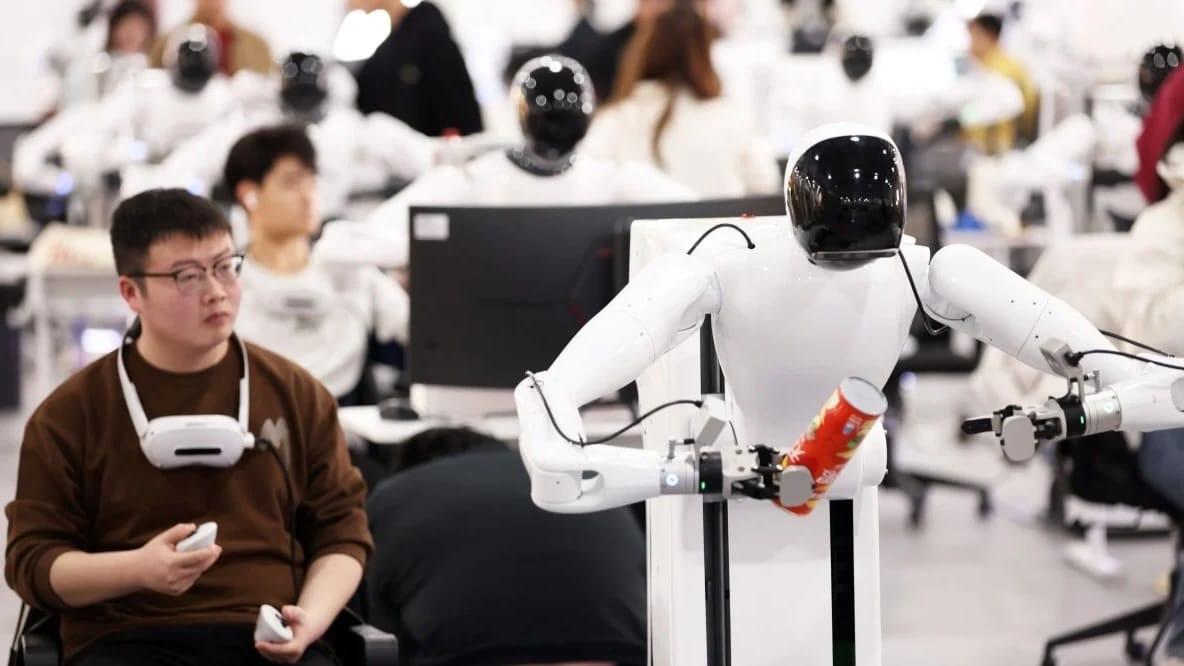
Image source: SCMP
The Rundown: China is rapidly rolling out giant “robot boot camps” where armies of young workers train humanoids on everyday service jobs, turning these facilities into industrial-scale data factories for embodied AI.
The details:
A flagship Beijing training base spans around 150K square feet, with mock restaurants, factories, and streets where humanoids practice skills.
Local officials say that the site alone can generate more than 6M data points per year and around 5K hours of robot data per month.
China reportedly has 40 state‑backed training centers across the country, with one Shanghai center capable of logging up to 50K data points a day.
Germany’s NEURA Robotics is also building a massive humanoid training hub dubbed RoboGym, letting startups book “gym time” to run real‑world drills.
Why it matters: China is turning robot school into an industrial sport, running giant boot camps that crank out robot data like reps in a gym, while U.S. players such as Tesla and Figure train mostly behind closed doors. RoboGym shows Europe is finally opening its own shared robot centers, but it still has to chase Beijing’s scale.
ROBOTS FOR GOOD
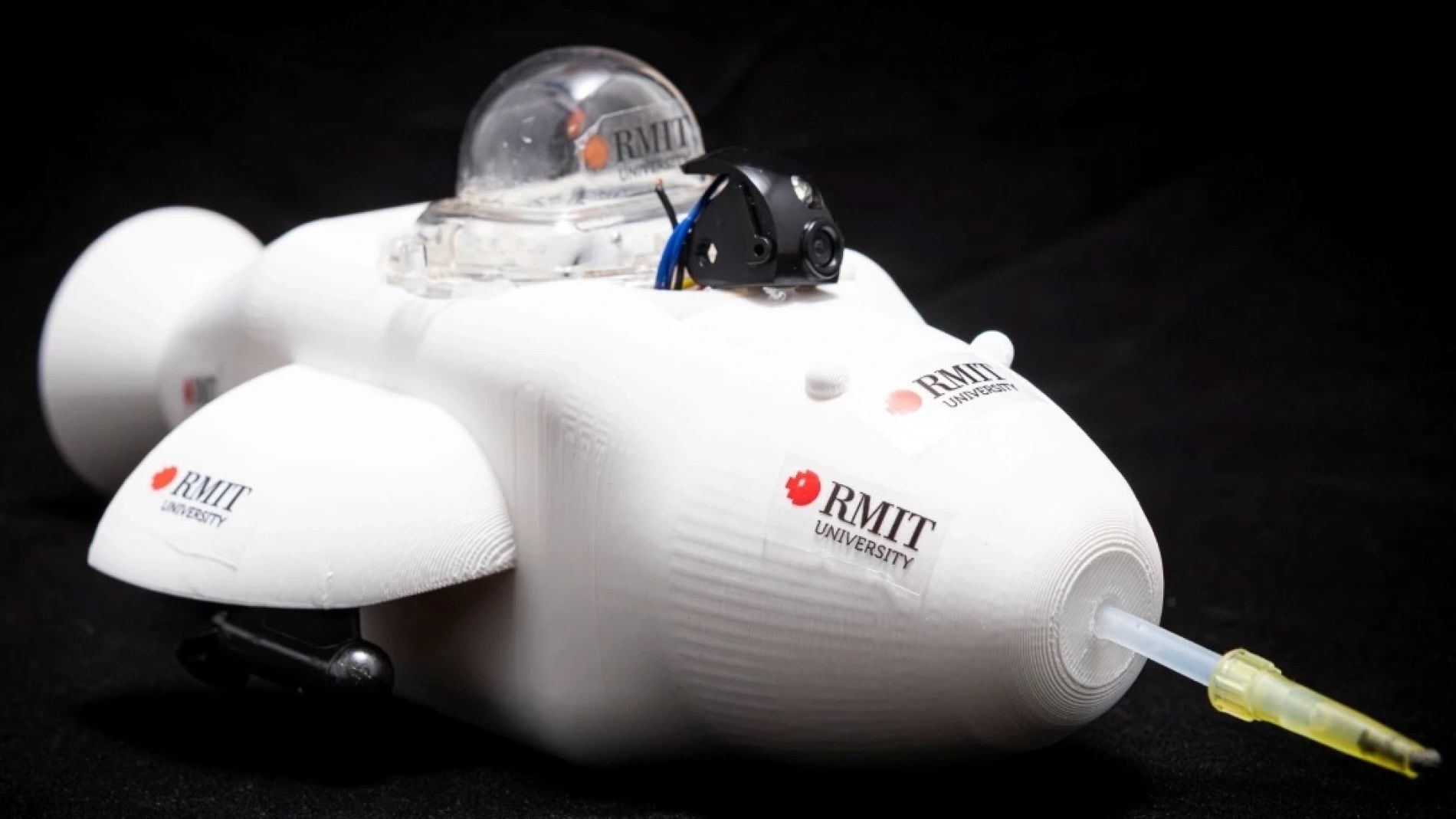
Image source: RMIT
The Rundown: A sneaker-sized oil-skimming robot from RMIT University in Australia is using a sea-urchin-inspired filter and a dolphin-shaped body to help clean up marine oil spills.
The details:
The Electronic Dolphin skims oil from the water’s surface, using a small pump to pull in contaminated liquid and store the recovered oil onboard.
Its sea‑urchin‑inspired filter is coated with microscopic spikes that trap air pockets so water rolls off while oil sticks, letting it capture oil with 95% purity.
The prototype currently runs for about 15 minutes per battery charge, recovering roughly 2mL of oil per minute, and the filter material can be reused.
The team plans to scale it up in size and eventually make it fully autonomous so fleets can vacuum spills, autonomously return to base to offload and recharge.
Why it matters: Oil-spill cleanup is dangerous, messy, and labor-intensive, and RMIT’s robo-dolphin points to a new generation of marine-cleanup robots — alongside systems like IADYS’ oil-skimming Jellyfishbot and SeaClear2.0’s coordinated robot fleets — designed to take on hazardous pollution response with less human exposure.
QUICK HITS
Tesla unveiled its third-generation Optimus humanoid at AWE 2026 in Shanghai, aiming to start mass production by late 2026.
U.S. startup Nuro began testing its end-to-end AI-powered autonomous driving stack on Toyota Prius vehicles with safety drivers on public streets in Tokyo.
Grubhub is teaming with drone startup Dexa on a trial delivering Wonder restaurant orders by air to nearby New Jersey customers at no extra cost beyond regular fees.
ABB Robotics is partnering with Nvidia to bring industrial-grade physical AI into factories via ABB’s RobotStudio software and Nvidia’s Omniverse-based tech.
Rhoda AI raised $450M at a $1.7B valuation to build a “Direct Video Action” model that turns internet videos straight into robot control for messy real‑world tasks.
iRobot is rolling out the Roomba Mini robot vacuum-and-mop to the U.K. and Europe, even as the company restructures under Chapter 11.
A University of Texas research team built a highly sensitive robotic hand that can pick up and gently hold a single potato chip without breaking it.
MIT built a two-step planning method that uses VLMs to turn a single scene image into precise instructions, making robots better at long, complex tasks.
Samsung SDI is unveiling its first pouch‑style solid‑state battery, designed for compact physical AI systems like humanoids.
Zoox began mapping Dallas and Phoenix with sensor‑packed SUVs as a first step toward testing its self‑driving system and eventually deploying its robotaxis there.
U.S. engineers developed a dual-arm “zero-momentum” robot control method to keep satellites stable during in-orbit robotic repairs.
A space engineer created WANDER-bot, a 3D‑printed, wind-powered robot designed to roam harsh environments or potentially other planets without batteries.
A Hexagon global survey finds robot anxiety is highest where robots are rare and drops as people see them working safely in everyday settings.
COMMUNITY
Read our last AI newsletter: Perplexity's new answer to OpenClaw
Read our last Tech newsletter: Air taxis to fly in 26 states
Read our last Robotics newsletter: DJI pays $30k for robot vacuum hack
Today’s AI tool guide: Create agentic workflows in Google Workspace
RSVP to our next workshop today @ 2PM EST: AI coding bootcamp pt. 1
That's it for today!Before you go we'd love to know what you thought of today's newsletter to help us improve The Rundown experience for you. |
See you soon,
Rowan, Joey, Zach, Shubham, and Jennifer — The Rundown’s editorial team