- The Rundown Robotics
- Posts
- Hyundai to mass-produce Atlas humanoids
Hyundai to mass-produce Atlas humanoids
PLUS: A robot vacuum that climbs stairs


Jennifer Mossalgue, Rowan Cheung, Shubham Sharma & Zach Mink
January 08, 2026

Good morning, robotics enthusiasts. CES 2026 has flooded Las Vegas with humanoids doing backflips and folding laundry, but Boston Dynamics’ Atlas made a different kind of entrance: with an actual production timeline.
Hyundai, which owns the robotics pioneer, says it'll churn out 30K humanoid workers annually by 2028. But is Atlas really ready for that kind of scale, or is this more humanoid hype?
In today’s robotics rundown:
Hyundai to build 30K Atlas bots a year by 2028
This robot vacuum can climb stairs
Self-driving tech giant goes all-in on humanoids
Apple’s former Face ID team targets robot vision
Quick hits on other robotics news
LATEST DEVELOPMENTS
HYUNDAI & BOSTON DYNAMICS

Image source: Hyundai
The Rundown: At CES, Hyundai unveiled a production-ready version of Boston Dynamics’ Atlas humanoid and announced plans to manufacture 30K robot workers per year by 2028 at its sprawling plant in Georgia.
The details:
Hyundai is pitching this as “human-centered automation”: robots take on hard physical tasks while human workers shift to supervision and maintenance roles.
Atlas won’t be alone — Spot and Stretch will also be embedded across Hyundai’s software-defined factories, with NVIDIA’s AI stack handling training.
Labor unions are already pushing back, with Kia’s union demanding a formal review committee; Hyundai execs insist new human jobs will materialize.
South Korea’s Hyundai holds roughly 80% of Boston Dynamics following a 2021 acquisition that valued the U.S. robotics pioneer at $1.1B.
Why it matters: Hyundai just set one of the industry’s most concrete production targets — 30K humanoid units annually by 2028 — while rival Tesla floats ambitious goals without firm timelines and Figure deploys limited pilots. Questions loom about the fate of human workers and whether or not Atlas can handle the rigors of the job.
ROBOROCK

Image source: Roborock
The Rundown: One of CES’s most crowd-pleasing demos wasn’t a humanoid doing parkour — it was Roborock’s stair-climbing robot vacuum, finally tackling the one obstacle that’s kept robot cleaners trapped on single floors for two decades.
The details:
The Saros Rover rolls on four powered wheels mounted to two articulated “legs” that lift and lower independently, hauling itself up steps one at a time.
On flat terrain, the legs fold in so the bot zips around like a conventional wheeled rover, switching gaits only when it hits vertical obstacles.
Cameras and sensors map stair edges and plot climbing routes designed to keep the machine from tumbling backward or getting wedged on landings.
Roborock has announced no price or release date, but promises the project is “in development.”
Why it matters: Roborock is pushing into legged mobility just as Roomba’s parent, iRobot, has filed for bankruptcy. The Saros Rover also keeps Roborock in the broader home-robot race alongside humanoid contenders, which promise multi-task autonomy but may be overkill for households that just want their floors vacuumed.
MOBILEYE & MENTEE
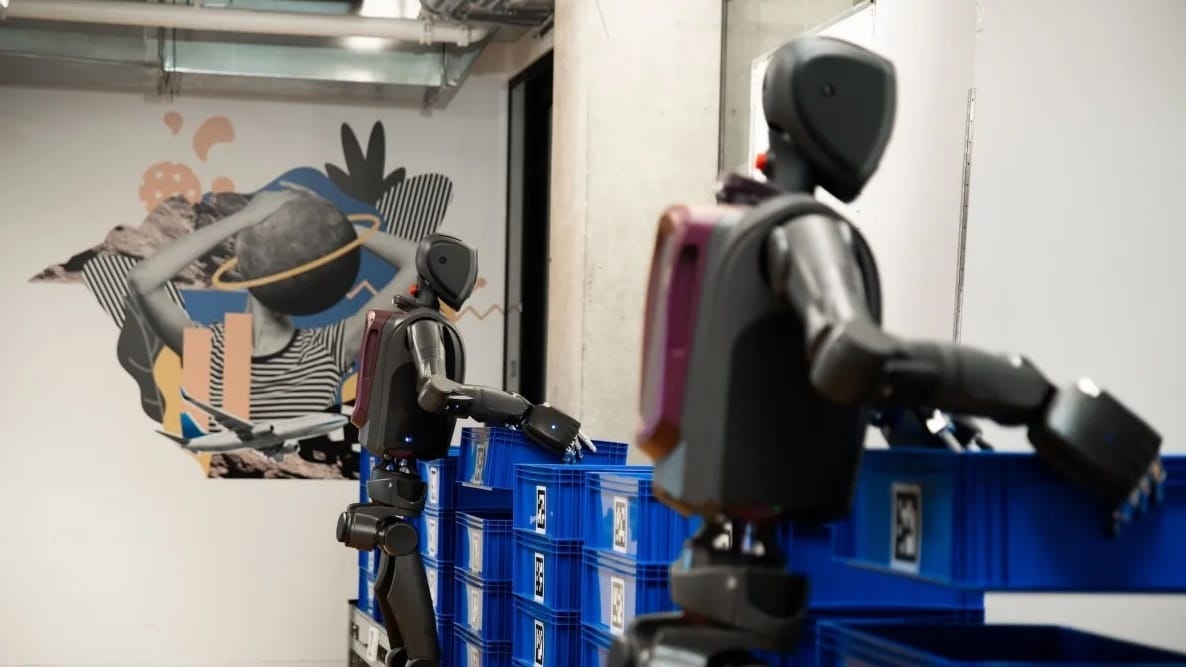
Image source: Mentee Robotics
The Rundown: Intel-backed vision chip maker Mobileye is acquiring Israeli humanoid startup Mentee Robotics for $900M, betting that the same computer vision tech that powers autonomous driving can teach warehouse robots how to work like humans.
The details:
The deal, announced at CES, combines $612M in cash with up to 26.2M shares of Mobileye stock, with Mentee operating as an independent unit.
MenteeBot learns tasks by watching humans once, training in simulation before executing autonomously — no teleoperation or motion-capture required.
In a demo, a MenteeBot autonomously swapped another robot’s battery after observing a human perform the task once, using onboard cameras.
Mobileye calls this “Mobileye 3.0,” leveraging its $24.5B automotive pipeline to fund humanoid development at scale.
Why it matters: Billionaire Amnon Shashua — who founded and chairs both companies — is essentially selling to himself, giving Mentee access to Mobileye’s resources and compute, while the self-driving chip giant bets its car perception tech can power humanoids competing with Tesla, Agility, and Figure.
LYTE
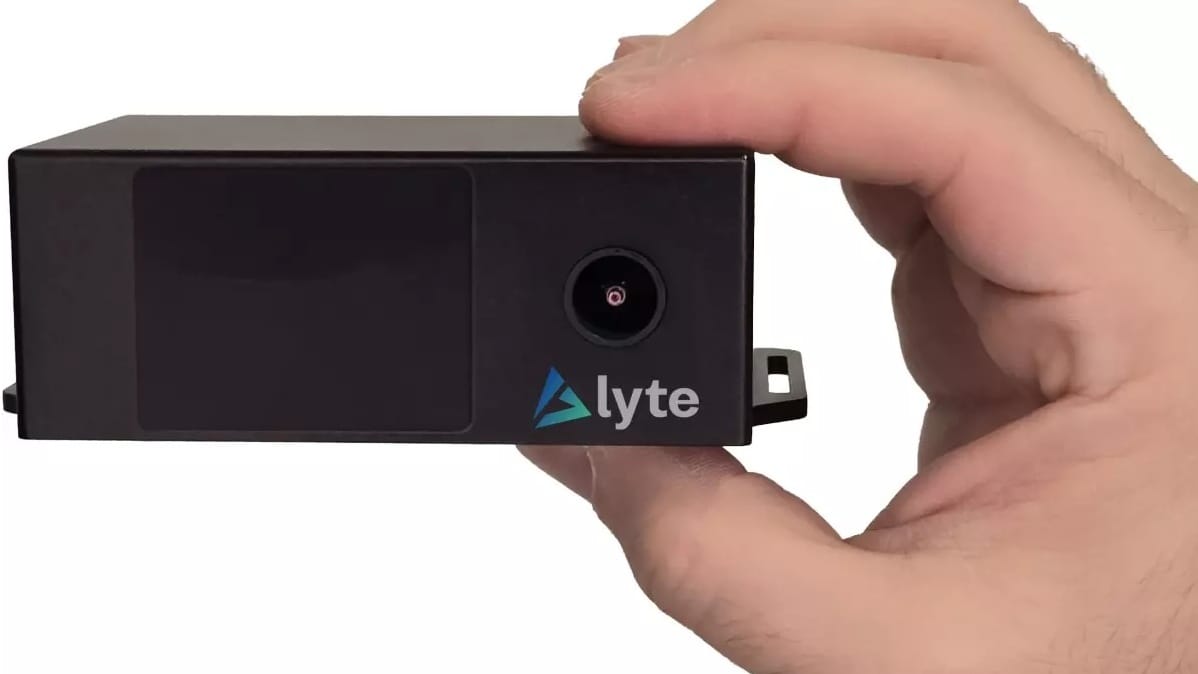
Image source: Lyte
The Rundown: Lyte, a new startup founded by the engineers behind Apple’s Face ID, is pitching a plug-and-play “visual cortex” for robots — a sensor stack that could finally give humanoids the spatial awareness they need to stop bumping into things, or worse.
The details:
Lyte has raised $107M to build LyteVision, a perception platform that fuses camera, inertial, and 4D distance-and-velocity sensors into a single system.
Founder Alexander Shpunt previously co-founded PrimeSense, the 3D-sensing firm behind Microsoft’s Kinect and the tech that evolved into Apple’s Face ID.
LyteVision is designed to give robots what Lyte calls “non-zombie” awareness, perception that produces actionable data so machines can react in real time.
The company is positioning its stack as a drop-in solution for an industry where most players still struggle to wire up basic sensor arrays.
Why it matters: Robotics is sprinting toward a $125B AI market by 2030, but perception remains the bottleneck. If Lyte — freshly out of stealth — can actually ship a reliable plug-and-play visual system, it could quietly become the default brain powering the robots everyone else is racing to build. Or at least, that’s the goal.
QUICK HITS
China’s humanoid boom is on full display at CES 2026, where 21 of 38 humanoid exhibitors come from Chinese companies.
Unitree Robotics spotlighted its G1, H2, and R1 humanoids at this week’s CES, with the compact G1 reportedly stealing the show via martial arts demos.
Samsung shelved its long-hyped Ballie home robot, turning the once-promised consumer device into an internal “innovation platform” after repeated delays.
AgiBot used CES to mark its U.S. debut with the A2 humanoid, showing it as a 169cm “hospitality helper” whose demo was paired with the launch of Genie Sim 3.0.
Germany’s NEURA unveiled third-gen 4NE1, a Studio F.A. Porsche–designed humanoid with 100 kg lift, tactile “skin,” and Isaac GR00T AI.
UK startup Humanoid debuted HMND 01 Alpha at CES, a towering 2.2m wheeled humanoid built in just seven months.
Waymo is renaming its Zeekr robotaxi as “Ojai,” adding a steering wheel and design tweaks as it readies the van for launch across its U.S. and future UK robotaxi service.
A Chinese surgical robot from Shanghai MicroPort MedBot, trained on surgical videos, autonomously performed 88% of a complex biliary operation on a pig.
An AI-driven robotic bartender called AI Barmen debuted at CES 2026, serving up personalized cocktails while automating bar workflows.
Beauty tech brand Luum is bringing its AI lash-extension robot to Ulta Beauty and Nordstrom, speeding up precise lash services while keeping human artists in the loop.
Amazon acquired Indian startup Rightbot, bringing its suction-based truck- and container-unloading robots in-house to bolster the retail giant’s robotics fleet.
Tensor unveiled Robocar, an SUV-sized Level 4 “supercomputer on wheels” built on an 8,000‑TOPS NVIDIA Thor stack, aimed at future Lyft services.
COMMUNITY
Read our last AI newsletter: ChatGPT levels up with Health
Read our last Tech newsletter: Lego's iconic brick just got a brain
Read our last Robotics newsletter: Agibot’s tiny, portable humanoid
Today’s AI tool guide: Automate email expense tracking with Claude
RSVP to next workshop @ 4 PM EST Friday: AI Foundations Bootcamp Pt. 1
That's it for today!Before you go we'd love to know what you thought of today's newsletter to help us improve The Rundown experience for you. |
See you soon,
Rowan, Joey, Zach, Shubham, and Jennifer — The Rundown’s editorial team