- The Rundown Robotics
- Posts
- NEO's new humanlike hands
NEO's new humanlike hands
MIT's wild flying fish-bird bot


Jennifer Mossalgue, Rowan Cheung, Shubham Sharma & Zach Mink
July 13, 2026

Good morning, robotics enthusiasts. 1X CEO Bernt Børnich promised “the most advanced robotic hand in human history” — then unveiled tendon-driven, 22-DoF hands for NEO that pick grapes, screw in light bulbs, and lift 20 lb. kettlebells.
The fingertips sense pressure and slip in real time, and the whole thing is waterproof enough that NEO can wash its own hands after cooking your dinner.
In today’s robotics rundown:
NEO’s hands can zip jackets, pour tea, and sign
This bird bot swims underwater, bursts into flight
Tesla skips the safety net in Miami
The case for robots that do nothing but float
Quick hits on other robotics news
LATEST DEVELOPMENTS
1X

Image source: 1X
The Rundown: Robotics company 1X just unveiled new tendon-driven hands for its NEO home robot, with 22 degrees of freedom across the fingers and palm, plus three at the wrist — enough to demo jacket zipping, glassware handling, and sign language.
The details:
The new hands/wrists pack 25 actuated DoF with tendon-driven joints and low gear ratios that 1X says give NEO human-level dexterity, strength, and speed.
High‑res tactile sensing across the fingertips, plus what 1X calls “force transparency,” means every joint doubles as a real-time sensor.
The hands are IP68 waterproof and food-safe, so NEO can wash them itself after cooking, with 1X saying it can produce 10K robots this year in-house.
Tesla’s Optimus V3 hands pack 22 DoF, and Singapore’s Sharpa is mass-producing a 22-DoF hand that it says can feel forces as light as a butterfly.
Why it matters: Rival hands may match NEO on dexterity, but 1X is optimizing for real homes — water, food, fragile objects. Its claimed edge is not more movement, but a hand designed to work around food and water without sacrificing sensitivity. 1X claims the hardware ceiling is now gone, leaving NEO limited only by how fast its AI can learn.
MIT/EPFL

Image source: Raphael Zufferey
The Rundown: Engineers at MIT and EPFL built a half-pound flapping-wing robot that swims underwater, bursts through the surface in under a second, and keeps flying, mimicking diving birds like the Atlantic puffin.
The details:
The robot’s body lets water flood in, keeping it neutrally buoyant, with every component waterproofed and nylon wings reinforced by carbon fiber struts.
It flaps 6x times per second to stay airborne, but needs 10 wingbeats per minute to punch out of the water.
A single charge covers nearly four miles of flight or just over a mile of swimming, launching at a precise 70-degree pitch.
Biologist Glenna Clifton called it “a monumental step” for machines that swim, fly, and transition between the two, per results published in Science.
Why it matters: Ocean monitoring is expensive, slow, and sometimes dangerous for crewed vessels, which is why so much of the coastal ocean goes unmeasured. Researchers envision a cheap bird bot that launches from shore, dives near an algal bloom or coral reef, and flies its data home, making hourly sampling runs routine.
TESLA
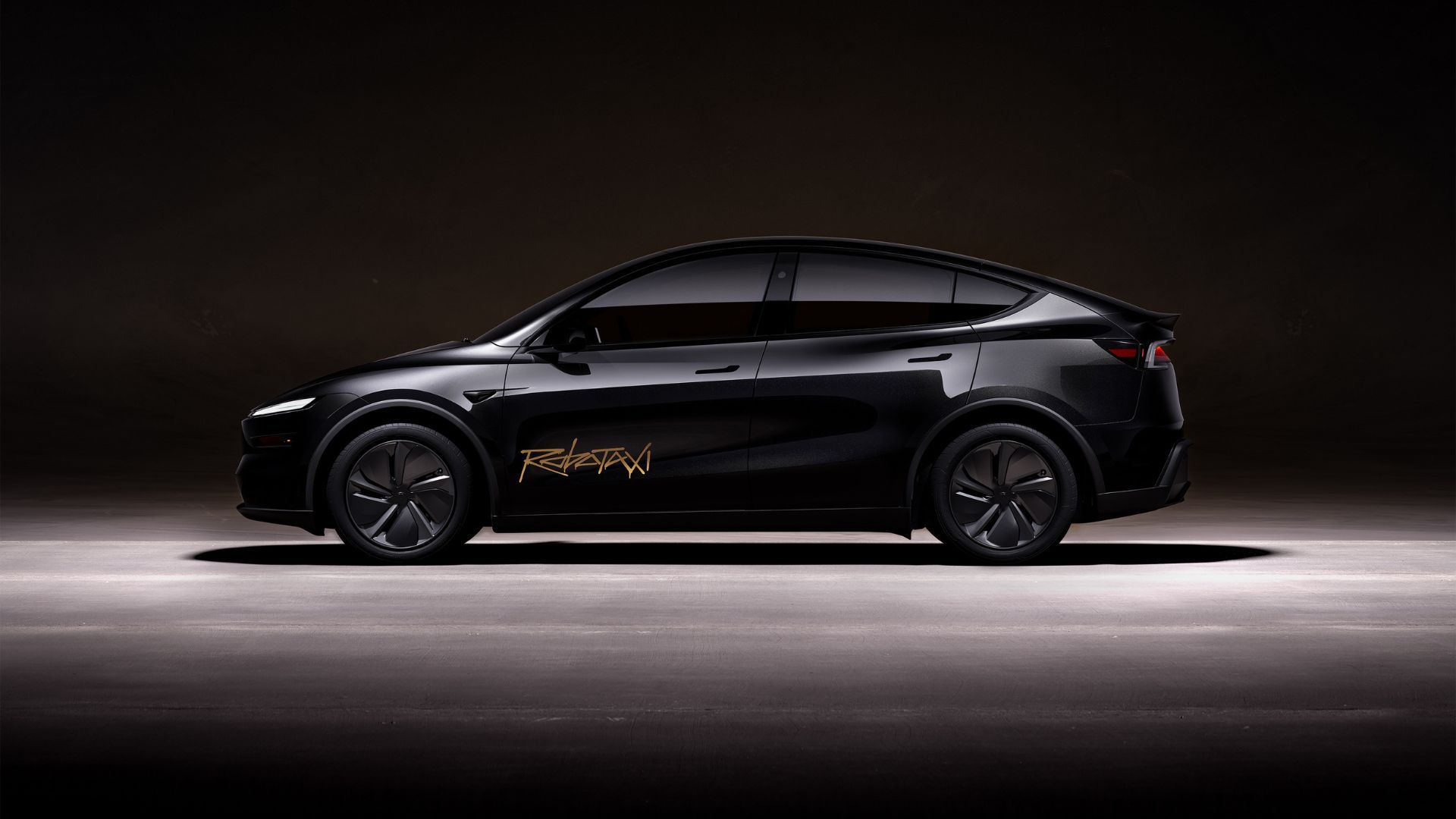
Image source: Tesla
The Rundown: Tesla is using its no-monitor Miami robotaxis to test a leaner playbook for scaling camera-only autonomy faster than rivals that rely on extensive local mapping and phased rollouts, The Information reports.
The details:
Tesla switched on robotaxis in Miami with no in‑car safety monitors from day one, skipping the supervised phase it used in Austin and other early markets.
The service runs in a tightly geofenced slice of western Miami, testing whether FSD trained on prior cities can generalize to new, unmapped streets.
Internally, it’s a template for hitting a dozen U.S. states by the end of 2026 — camera-only perception, remote oversight, and friendly state AV laws.
Launching unsupervised on Waymo’s turf turns the city into a live A/B test — Tesla’s data-opaque model against the sensor-heavy, regulator-friendly one.
Why it matters: Tesla is going driverless-first in a city that can punish camera-only autonomy with glare, downpours, and flooded streets — just as NHTSA probes whether FSD recognizes degraded visibility in time. The bet is that software can make new-city launches cheap and repeatable, but Miami opened with only two cars.
ROBOTICS RESEARCH

Image source: Mingyang Xu / Keio University / YouTube
The Rundown: Researchers just built a helium-filled robot with flapping wings that people instinctively hugged, patted, and held to their cheeks, in a sign that soft floating machines might crack the social-robot problem that rigid drones can’t, CNET reports.
The details:
The prototype “soft floating robot” uses a balloon-like body and tiny flapping wings to drift quietly through rooms and gently bump into people.
These soft floaters are framed as “aerial companions” that drift around homes, serving as robotic alarm clocks or nudges to move after sitting too much.
Its compliant materials and lack of hard rotors are meant to make it feel more like a friendly companion than a surveillance device or flying toy.
Limited payload and battery capacity mean these bots may need ultralight components or offboard AI and sensing to become practical companions.
Why it matters: Social robotics has mostly stayed on the ground because flying machines with rotors and wings haven’t been ideal to let loose inside a home. Cuddle-Fish suggests people might welcome these floating robots into their personal space, as a sort of robotic pet, as long as the hardware is built to be touched.
QUICK HITS
Mitsubishi Motors will co-develop humanoids with University of Tokyo startup, Highlanders, deploying them in its factories before mass-producing them next year.
Irish drone delivery startup Manna is building a U.S operations and manufacturing hub in Oklahoma, redirecting $50M toward reaching 6 more cities by the end of 2027.
California’s new AV rules let police ticket robotaxis directly to their manufacturers and require 1M testing miles before autonomous heavy trucks can deploy commercially.
Tesla finished dismantling the original Model S/X assembly line at its Fremont factory in just 46 days, clearing the way for its first dedicated Optimus production line.
General Intuition CEO Pim de Witte told TechCrunch robotics is headed for its ChatGPT moment, and that the real-world data rivals are collecting will be redundant.
California startup advanced.farm built a six-armed robotic apple harvester that uses vacuum suction grippers to pick around 2,500 apples per hour, outshining humans.
DeWalt just launched DALE, a downward-drilling robot, built with August Robotics to punch anchor holes in data center concrete up to 10x faster than human crews.
MIT developed FloatForm, a swarm of tiny autonomous robotic boats that can self-assemble into programmable floating structures on demand.
Scientists fitted remote-controlled cyborg cockroaches with tiny 3D‑printed “diving suits” that let the swarm walk and operate underwater for up to three hours.
AI² Robotics, a Shenzhen-based embodied AI company, raised about $735M at roughly a $3B valuation to scale its AlphaBot wheeled humanoids.
COMMUNITY
Read our last AI newsletter: Apple takes OpenAI to court
Read our last Tech newsletter: Netflix’s binge model is backfiring
Read our last Robotics newsletter: Ex-Tesla scientist’s faceless humanoid
Today’s AI tool guide: Go from idea to website with ChatGPT Work + Codex
RSVP to next workshop on July 17: Get knowledge work done with GPT 5.6
That's it for today!Before you go we'd love to know what you thought of today's newsletter to help us improve The Rundown experience for you. |
See you soon,
Rowan, Zach, Shubham, and Jennifer — The Rundown’s editorial team