- The Rundown Robotics
- Posts
- Travis Kalanick's stealth robot play
Travis Kalanick's stealth robot play
PLUS: Sunday Robotics hits $1B valuation


Jennifer Mossalgue, Joey Liu, Rowan Cheung, Shubham Sharma & Zach Mink
March 16, 2026

Good morning, robotics enthusiasts. Travis Kalanick is back — and he’s got robots. The Uber cofounder has spent years building Atoms, a stealth robotics venture born from his ghost-kitchen empire and now aimed at food, logistics, and even mining.
Forget the bipedal humanoids: Kalanick says wheels will win in the real world.
In today’s robotics rundown:
Uber’s Travis Kalanick launches robotics startup
California’s Sunday hits $1.15B valuation
Rivian’s robot startup just raised $500M
Unitree’s tennis bot can actually rally
Quick hits on other robotics news
LATEST DEVELOPMENTS
ATOMS

Image source: Ideogram / The Rundown
The Rundown: Uber cofounder and former CEO Travis Kalanick is launching Atoms, a stealthy robotics venture that aims to turn his CloudKitchens ghost‑kitchen empire into a fleet of wheeled industrial robots for food, logistics, and mining.
The details:
CloudKitchens is Kalanick’s delivery‑only restaurant business, which rents out commercial kitchens to virtual restaurant brands accessible via delivery apps.
Atoms has absorbed CloudKitchens and now pitches itself as a universal wheeled robot base for task‑specific machines, not humanoids.
The company is in talks to acquire autonomous trucking startup Pronto to accelerate its push into mining and industrial transport.
In a 1,600‑word manifesto, he cast Atoms as the dawn of a robotics “golden age,” with cheap software and energy fueling swarms of task‑specific robots.
Why it matters: Atoms is pitching a universal wheeled “robot base” for task‑specific machines, with Kalanick insisting wheels will beat humanoid legs in the real world. He says the company has been building in stealth for eight years and is finally ready to put robots to work across delivery, food service, mining, and other logistics‑heavy jobs.
TOGETHER WITH ROBOFLOW
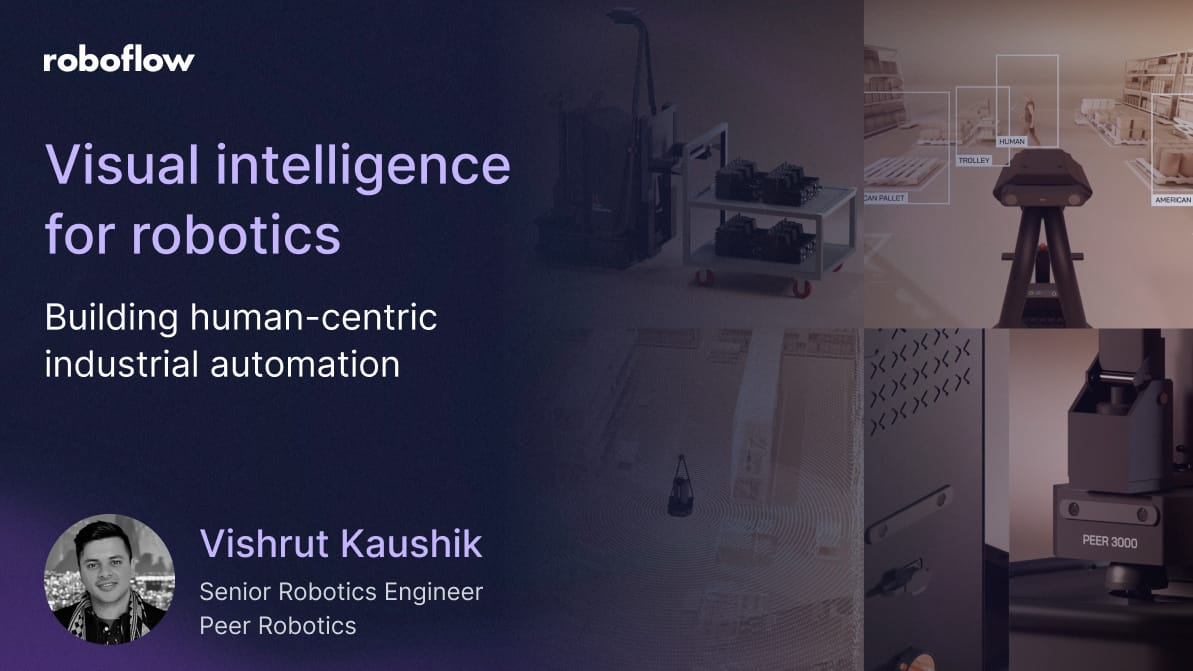
The Rundown: Visual AI company Roboflow goes live with Vishrut Kaushik, Senior Robotics Engineer at Peer Robotics, on how vision-enabled mobile robots are transforming factory floors, reducing physical demands and making facilities safer for human workers.
In this session, you’ll learn:
How Peer Robotics shifted from LIDAR to intelligent vision systems
How computer vision unlocks #D<-- remove digital twins and advance safety monitoring
The engineering behind their custom vision models and data pipelines
SUNDAY ROBOTICS
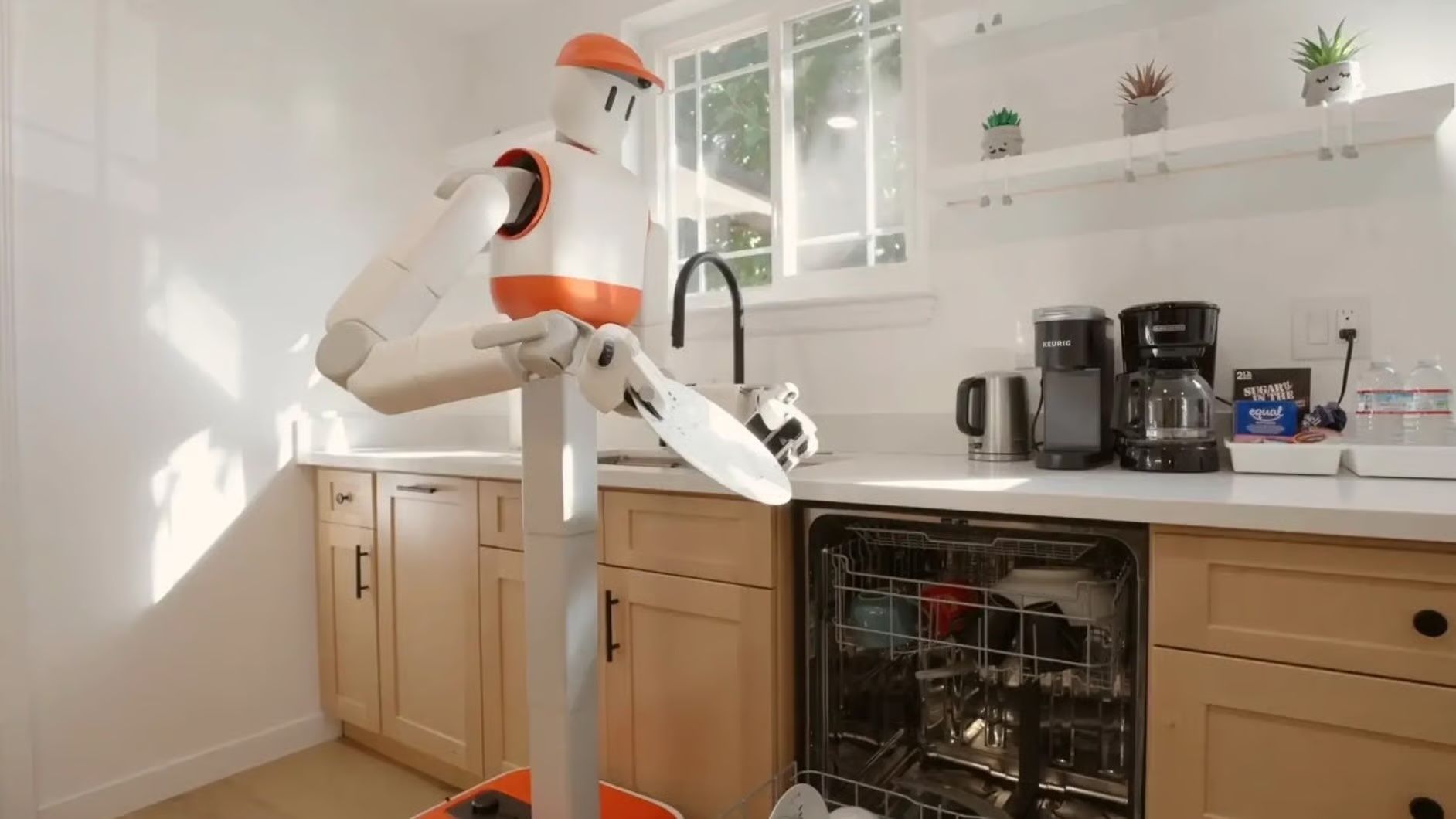
Image source: Sunday Robotics
The Rundown: California robotics startup Sunday just closed a $165M Series B round, hitting a $1.15B valuation, as the Silicon Valley startup races to put its general-purpose humanoid, Memo, in the home.
The details:
Founded by former Google DeepMind and Airbnb engineers Tony Zhao and Cheng Chi, Sunday is building Memo, a waist-high household humanoid.
Memo’s autonomy leans on Sunday’s “Skill Capture Glove” system, which has collected nearly 10M real-home chore demos from hundreds of households.
Sunday says it raised this money “to stop doing demos” and will use it to ship a beta fleet of Memo robots to early users later this year.
The company says it already has roughly 1K people on a waitlist for Memo and is leaning hard on modern AI techniques and large-scale manipulation data.
Why it matters: Sunday’s new funding drops it deep into the race to build general-purpose home robots, alongside Optimus, Figure, and Apollo. At the same time, it’s rubbing shoulders with a different wave of bots — like Amazon’s Astro — that want to be the “helpful robot in your living room,” just with very different shapes and skill sets.
MIND ROBOTICS

Image source: Stripe (YouTube)
The Rundown: Rivian spin-out Mind Robotics has raised $500M at a $2B valuation to automate the factory tasks that conventional robots still can’t do — and its founder, Rivian CEO RJ Scaringe, thinks that humanoids are solving the wrong problem.
The details:
Founded in November 2025 by Scaringe, Mind Robotics has now banked $615M in total funding.
The startup is building a full-stack industrial robotics platform to automate dexterous factory tasks that conventional industrial arms cannot handle.
Rivian, a major shareholder, is Mind’s launch partner, opening its factories, engineering talent, and production data as a training testbed for the robots.
Mind wants robots on factory lines by the end of this year, carving out space between legacy industrial vendors and humanoid startups.
Why it matters: Humanoids are grabbing headlines, but Scaringe insists the real factory value is in hands — manipulation and physical reasoning, not backflips. That pits Mind against both legacy industrial giants and humanoid players like Tesla and Figure, which he argues add complexity and power draw without adding line value.
ROBOTICS RESEARCH
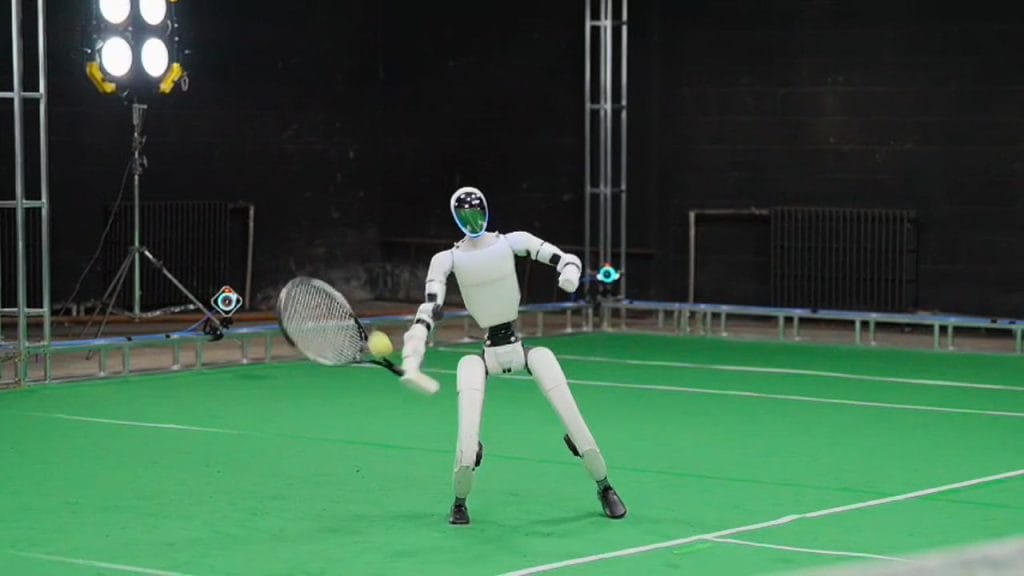
Image source: Github
The Rundown: A Unitree G1 humanoid trained by Chinese researchers can now hold its own on a tennis court — returning balls, tracking footwork, sustaining multi-shot exchanges with human opponents.
The details:
The system, called LATENT, was trained on just five hours of motion-capture data — short, imperfect clips of human swings and movement.
It returns balls traveling over 15 m/s with roughly 90% accuracy, enough to keep rallies going rather than just reacting to staged shots.
The team has open-sourced the approach on GitHub, framing LATENT as a reusable template for teaching athletic skills from messy real-world data.
Why it matters: The G1 retails for around $16K — cheap by humanoid standards — and it learned fluid, unscripted court play without pristine training data or choreographed setups. If the same pipeline transfers to other high-speed physical tasks, “five hours of motion capture” could become the new baseline for robot athletic training.
QUICK HITS
Uber started offering Hyundai-owned Motional’s self-driving Ioniq 5 robotaxis, with safety drivers for now, for rides between select Las Vegas hotspots via its app.
Lucid Motors unveiled a steering-wheel-free “Lunar” robotaxi concept built on its upcoming mid-size EV platform, while outlining future plans with Uber and Nuro.
Engineers built a wearable two-legged robot that attaches behind a person, walking in sync to carry loads and effectively turning the user into a cyborg “centaur.”
Samsung just created a dedicated “Hand Lab” inside its robotics division to develop highly dexterous, tendon‑driven robotic hands for future humanoids.
Uber, Wayve, and Nissan plan to pilot a Nissan Leaf–based robotaxi service on Uber’s app in Tokyo in late 2026, marking Uber’s first robotaxi partnership in Japan.
Two UK brothers built a 3D‑printed robot that uses custom algorithms to solve a 4×4×4 Rubik’s Cube in 45.3 seconds, earning a new Guinness World Record.
A Unitree humanoid in Macau was removed from the street by police after it startled a 70‑year‑old woman, prompting a hospital visit and an official warning to its operator.
Researchers built a bicycle‑style robot that balances on two wheels at high speed while using AI to dodge obstacles in real time.
Chinese startup XGSynBot unveiled the Z1, a wheeled humanoid for factories that can swap modular tools like grippers and welders in under six seconds.
Researchers built a silicon photonics chip that lets robots and drones generate 3D maps while simultaneously measuring the speed of moving objects.
COMMUNITY
Read our last AI newsletter: Musk takes xAI into a full rebuild
Read our last Tech newsletter: Apple’s foldable iPhone leaks
Read our last Robotics newsletter: Figure’s humanoid cleans living rooms
Today’s AI tool guide: Create an intro animation in 15 minutes
RSVP to our next workshop on March 19: AI coding bootcamp pt. 2
That's it for today!Before you go we'd love to know what you thought of today's newsletter to help us improve The Rundown experience for you. |
See you soon,
Rowan, Joey, Zach, Shubham, and Jennifer — The Rundown’s editorial team