- The Rundown Robotics
- Posts
- Uber to launch robotaxis in 15 cities
Uber to launch robotaxis in 15 cities
PLUS: Waymo gets its own world model


Jennifer Mossalgue, Joey Liu, Rowan Cheung, Shubham Sharma & Zach Mink
February 09, 2026

Good morning, robotics enthusiasts. Uber is betting hundreds of millions on robotaxis in more than a dozen cities by year-end — including its first push into Asia.
The expansion relies entirely on partners like Baidu, WeRide, and Momenta to supply the self-driving tech, not Uber’s own stack. Can it lock down the map before Waymo?
In today’s robotics rundown:
Uber plans robotaxi blitz in 15 cities this year
Waymo builds a world model for robotaxis
EV maker Faraday Future pivots to humanoids
Harvard 3D-prints programmable soft robots
Quick hits on other robotics news
LATEST DEVELOPMENTS
UBER
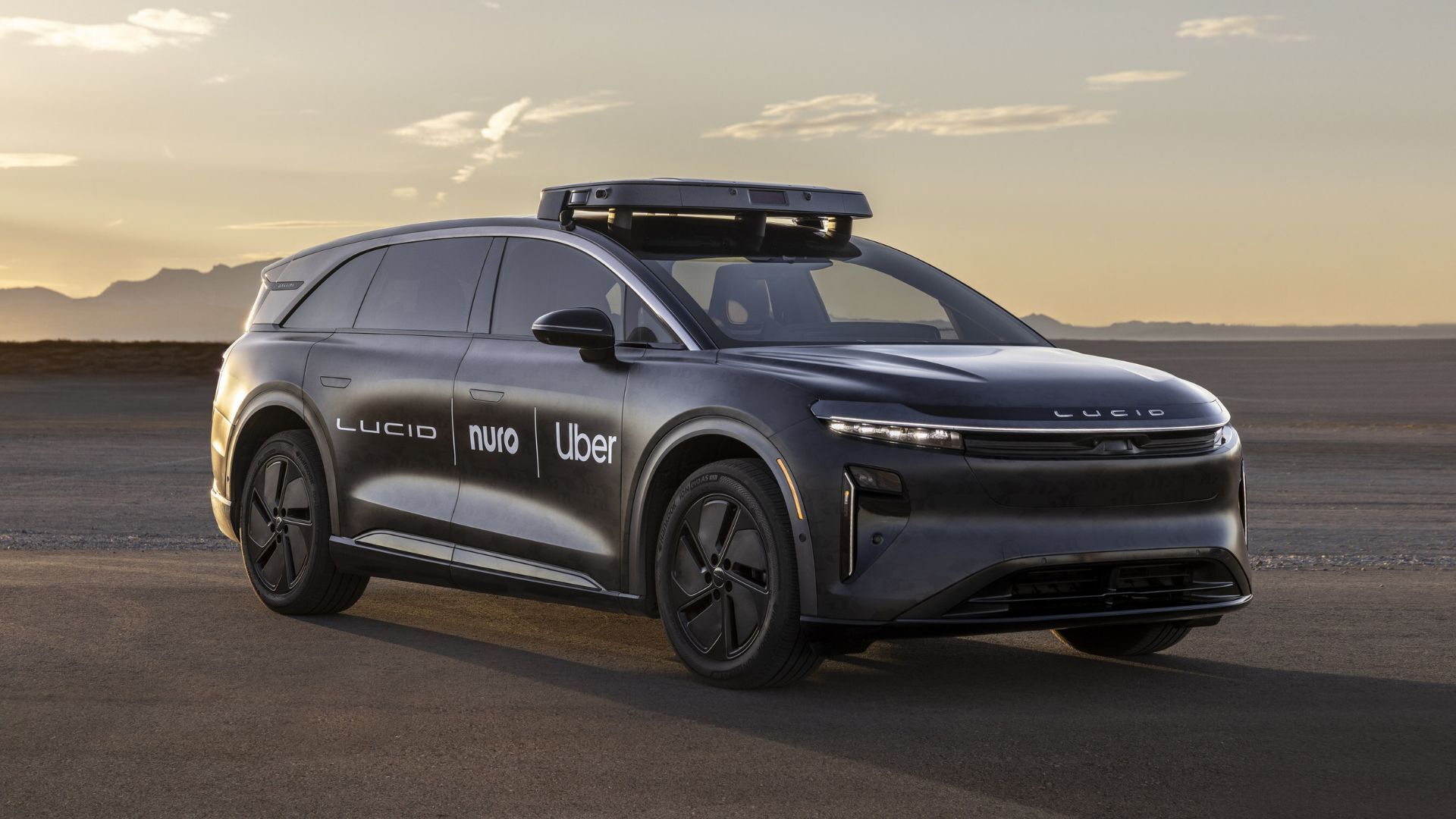
Image source: Uber
The Rundown: Uber is reportedly earmarking hundreds of millions of dollars to launch robotaxi rides in more than 10 cities by year-end, including Madrid, Houston, Zurich, and Hong Kong — marking its first push into Asia.
The details:
Uber’s roadmap targets roughly 15 cities globally, deploying Level 4 robotaxis through partnerships rather than building its own self-driving stack.
In Hong Kong, Uber is expected to lean on Chinese AV partners such as Baidu, which already holds a local permit for limited Apollo Go robotaxi trials.
Madrid and Zurich join previously announced European pilots in London and Munich, where Uber will deploy vehicles from WeRide and Momenta.
Uber and WeRide will also roll out at least 1,200 robotaxis across Abu Dhabi, Dubai, and Riyadh, with pilots starting this year.
Why it matters: The strategy lets Uber scale autonomous rides without building its own tech, while giving Chinese AV suppliers like Baidu, Momenta, and WeRide a fast track into Western and Middle Eastern capitals under the Uber brand — intensifying pressure on Waymo, Tesla, and regional players like Bolt and Didi.
WAYMO

Image source: Waymo
The Rundown: Waymo just developed a Genie-3–based world model that lets it turn real driving footage into controllable, photorealistic scenarios that enable its robotaxis to deal with rare, high‑risk situations.
The details:
The system generates photorealistic, multi-sensor 3D driving scenes that engineers can manipulate by changing driving inputs or editing scene elements.
Waymo can synthesize extreme scenarios that the fleet is unlikely to encounter in real life: tornadoes, floods, unusual animals, or bizarre road geometries.
Engineers rerun actual drives as “what if” scenarios to probe edge cases without risking hardware or waiting years for rare events to occur naturally.
The model was trained on Waymo’s massive real-world driving dataset — over 25M autonomous miles.
Why it matters: Autonomous vehicles face a “long tail” problem — rare but critical scenarios too dangerous or unlikely to test in reality. By generating synthetic edge cases at scale, Waymo says it can validate safety in situations like flash floods or debris-strewn roads without waiting decades for its fleet to encounter them naturally.
FARADAY FUTURE

Image source: Faraday Future
The Rundown: Faraday Future, the cash-strapped California electric vehicle maker, unveiled a robotics division that appears to be Chinese robotics startup Agibot’s hardware wrapped in premium branding.
The details:
FF launched 3 robots — a humanoid, a compact “action” bot, and a wheeled unit — marketed for car dealerships under the “FF EAI-Robotics” banner.
The machines bear a striking resemblance to AgiBot’s A2 and X2 platforms, leading critics to accuse FF of white-labeling existing Chinese tech.
FF’s pitch is that it will provide the software, AI “brain,” and services layer on top of this hardware for dealers.
Pricing ranges from a few thousand dollars for the wheeled model to $40K for the flagship humanoid, with additional software “skills” sold separately.
Why it matters: The debut, capped by an awkward dance‑off between a humanoid and a human performer, immediately triggered investor skepticism, with the company’s stock reportedly plunging. Faraday Future says it will start deliveries by the end of the month, but it’s unclear whether the market will actually bite.
HARVARD

Image source: Harvard John A. Paulson School of Engineering
The Rundown: Harvard engineers just built a 3D-printing method that programs how soft robots bend and twist — the technique skips molds and assembly, printing motion directly into the structure.
The details:
Single-nozzle printing deposits a polyurethane shell around a gel core, creating hollow air channels that control exactly how the structure bends when inflated.
Prototypes include a flower actuator that curls on command and a five-fingered gripper with working knuckles, both printed in one pass without assembly.
The method collapses weeks of mold-making and multi-step casting into a single print job that can be redesigned by adjusting software parameters.
Target applications include surgical tools for tight anatomical spaces, rehabilitation wearables, and industrial grippers that handle delicate biologics.
Why it matters: The method reduces weeks of fabrication into one print job, challenging approaches from MIT and Stanford. It makes soft robot motion predictable— eliminating the trial-and-error testing that has long plagued the field. Key uses include surgical tools, rehabilitation devices, and delicate industrial handling.
QUICK HITS
Boston Dynamics’ first‑gen electric Atlas now performs a clean round‑off backflip using a whole‑body learning framework developed by the RAI Institute.
Chinese robotics firm Agibot released a viral video of its Lingxi X2 humanoids performing synchronized kung fu routines with Shaolin monks at the Shaolin Temple.
Tesla’s Optimus program leans heavily on a dense network of Chinese suppliers for core hardware, underscoring how dependent the robot is on Chinese manufacturing.
Chinese humanoid makers like Agibot, Unitree, and Noetix are using Lunar New Year galas and livestreamed variety shows to showcase dancing, joke-telling robots.
Waymo’s plan to launch robotaxis in Washington, DC, this year stalled as the city’s regulatory process leaves the company lobbying hard but without a clear path forward.
Nevada-based Cartwheel Robotics, the startup behind the compact Yogi humanoid, is shutting down after failing to secure enough funding to move beyond prototypes.
USC researchers showed that sea stars’ independent tube feet provide a blueprint for robots that can keep moving even when flipped or cut off from a central controller.
Hong Kong researchers found that robots combining empathetic speech with carefully chosen music can make interactions feel more emotionally supportive.
Machina Labs raised a $124M Series C to expand its AI‑driven robotic metal-forming factories for defense, aerospace, and advanced mobility customers.
Beijing’s national Humanoid Robotics Innovation Center raised $100M in its first funding round to push its Tiangong humanoid into commercial production.
Indian robotics startup Addverb unveiled Elixis, a line of bipedal and wheeled humanoids aimed at warehouse and factory work.
Ocado, a UK-based online grocer and warehouse robotics specialist, is cutting up to 1K jobs, 5% of its workforce, after a tough year for its automated fulfillment centers.
COMMUNITY
Read our last AI newsletter: AI ads steal the show at Super Bowl LX
Read our last Tech newsletter: Paris raid raises stakes for X
Read our last Robotics newsletter: Cancer-fighting bubble bots
Today’s AI tool guide: Build custom lead widgets for your site
RSVP to our next workshop on Feb. 11: Agentic Workflows Bootcamp pt. 1
That's it for today!Before you go we'd love to know what you thought of today's newsletter to help us improve The Rundown experience for you. |
See you soon,
Rowan, Joey, Zach, Shubham, and Jennifer — The Rundown’s editorial team