- The Rundown Robotics
- Posts
- Waabi nabs $1B in Uber robotaxi deal
Waabi nabs $1B in Uber robotaxi deal
PLUS: Tesla kills off EV models for robots


Jennifer Mossalgue, Joey Liu, Rowan Cheung, Shubham Sharma & Zach Mink
January 29, 2026

Good morning, robotics enthusiasts.Toronto self-driving tech startup Waabi just landed $1B to prove one end-to-end AI model can drive both semi-trucks and robotaxis.
Uber is leaning in with $250M and a commitment to put 25K Waabi-powered robotaxis on its platform. But can they catch up to Waymo, Tesla, and Uber-backed Aurora?
In today’s robotics rundown:
Waabi lands $1B to take on Waymo and Tesla
Tesla kills flagship EVs to make room for robots
Figure drops Helix 02, a unified robot brain
Fauna’s ‘friendly’ humanoid emerges from stealth
Quick hits on other robotics news
LATEST DEVELOPMENTS
WAABI

Image source: Waabi
The Rundown: Toronto’s Waabi just locked down $1B in what is reportedly Canada’s largest-ever fundraise — a $750M Series C plus $250M from Uber — to deploy 25K robotaxis while conquering autonomous trucking with a single AI brain.
The details:
CEO Raquel Urtasun, formerly head of Uber’s AV research lab, says the same AI model will power both trucks and robotaxis.
Uber is committed to at least 25K Waabi-powered robotaxis on its platform in what the company calls the largest self-driving deal ever.
Waabi exemplifies ‘AV 2.0’ — end-to-end AI that learns from data rather than hand-coded rules and HD maps.
Commercial trucking targets 2027; robotaxi timelines and additional OEM deals are expected in the coming months.
Why it matters: Waabi is betting its end-to-end AI can scale from long-haul trucking to robotaxis, using one model instead of separate stacks. The catch: it’s doing it against deeper-pocketed rivals — Waymo, Tesla, Wayve, and Uber-backed Aurora — who also bring vastly more real-world driving data and operational mileage to the table.
TESLA
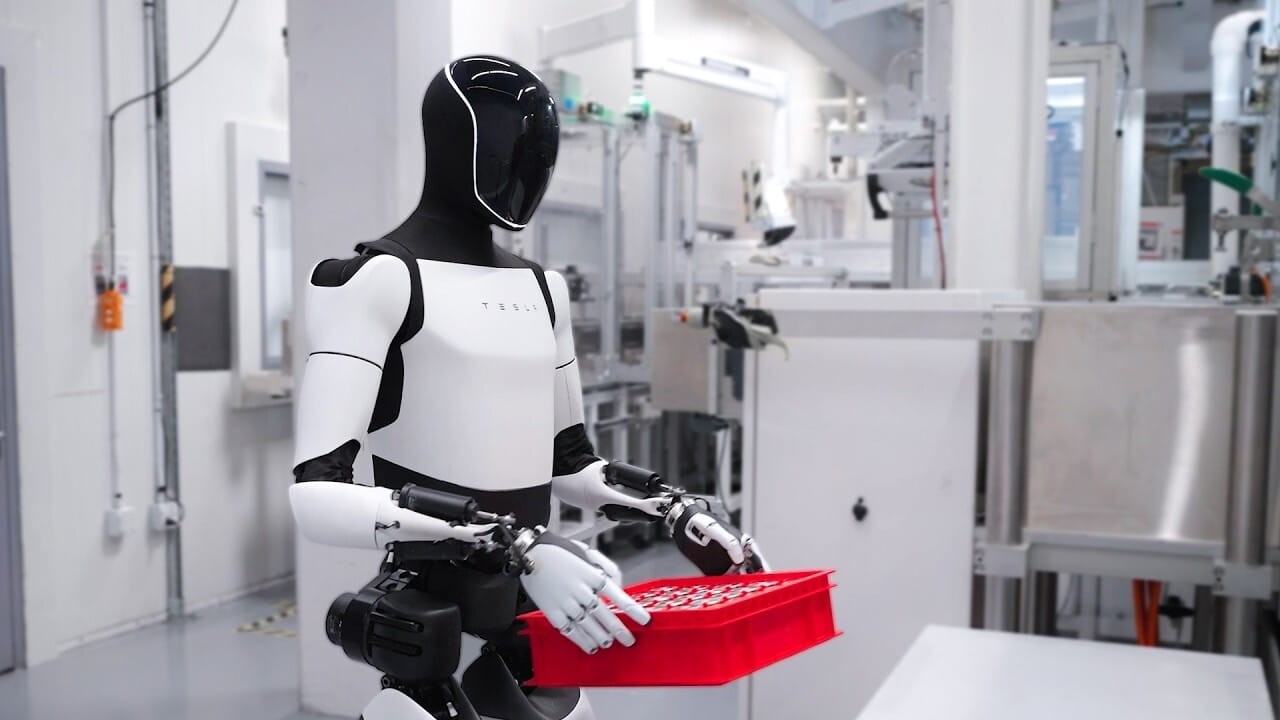
Image source: Tesla
The Rundown: CEO Elon Musk said that Tesla is discontinuing the luxury Model S sedan and Model X SUV next quarter and converting their Fremont factory production lines into a facility that can churn out 1M Optimus humanoids per year.
The details:
On yesterday’s earnings call, Musk described the move as an “honorable discharge” for the vehicles as Tesla shifts toward “a future based on autonomy.”
Tesla plans to unveil Optimus V3 this quarter, which the company calls its “first design meant for mass production” — production slated to begin this year.
Cybercab production starts in H1 2026, and Tesla is already running paid driverless robotaxi rides in Austin.
Tesla is pouring $20B into capital expenditures this year to fund new factories for Optimus, Cybercab, Semi, and AI computing infrastructure.
Why it matters: Tesla is sacrificing the luxury EVs that defined its brand to clear factory space for Optimus, the humanoid that Musk predicts could add $20 trillion to Tesla’s market cap — if he can actually get it into mass production. Tesla fans who want a new Model S or X, order now or never.
FIGURE

Image source: Figure / Reve
The Rundown: California robotics startup Figure just unveiled Helix 02, a unified AI control system that replaces 109K lines of hand-tuned C++ with a 10M‑parameter neural network that teaches robots to move more like humans.
The details:
Figure demoed what it claims is the ‘most complex’ autonomous humanoid task to date: a 4-minute, 61-action dishwasher cycle across a full-sized kitchen.
The Figure 03 robot now uses its entire body as a tool — closing drawers with its hip and lifting the dishwasher door with its foot when hands are occupied.
New palm cameras and tactile sensors — sensitive to three grams — enable dexterous tasks previously out of reach, like unscrewing bottle caps.
The system executes whole-body control at 1 kHz, taking full-body joint state as input and outputting actuator commands directly to every joint.
Why it matters: Fusing walking, grasping, and sensing into one learned system moves humanoids from scripted demos to continuous autonomy in unpredictable environments. Branding the AI separately from the hardware hints at a longer play: a general-purpose robot brain for platforms beyond Figure 03.
FAUNA ROBOTICS
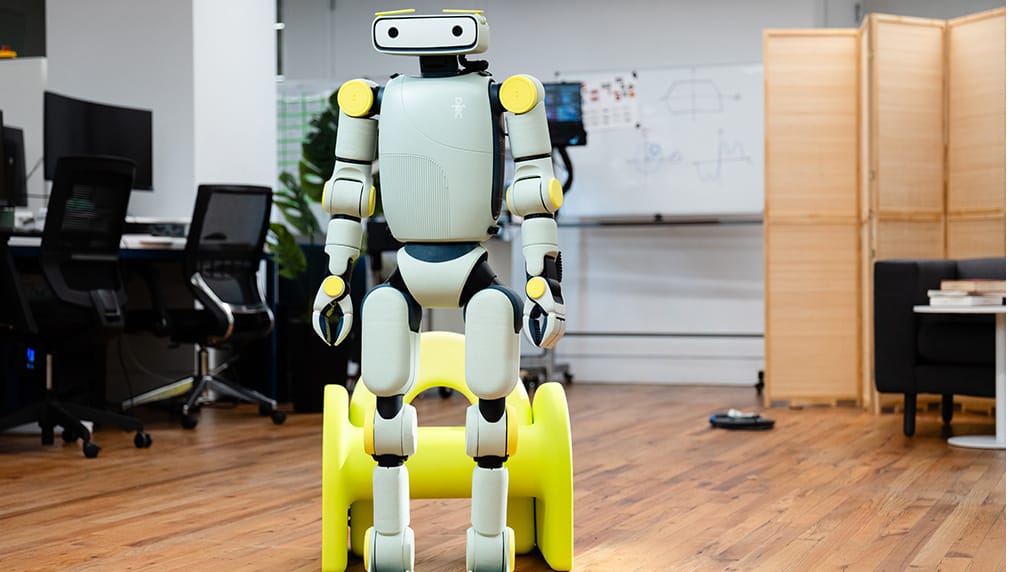
Image source: Fauna Robotics
The Rundown: NYC startup Fauna Robotics emerged from two years of stealth development with Sprout, a 3.5-foot humanoid wrapped in sage-green foam designed to feel friendly and approachable rather than factory-ready.
The details:
Priced at $50K and shipping now, Sprout ships as a developer platform, with Disney, Boston Dynamics, UC San Diego, and NYU among the early customers.
The team built Sprout around safety-first principles — compliant joints, limited torques, and soft exteriors — so it can operate in homes and schools.
Sprout dances, fetches objects, rises from chairs unassisted, and can be piloted via game controller, phone app, or VR headset.
The robot ships with built-in localization, on-demand mapping, and a modular navigation stack for tracking position, avoiding obstacles, and planning routes.
Why it matters: Fauna claims to be the first U.S. company actively shipping humanoids as a developer platform, betting that Sprout can spark the same software ecosystem that smartphones unleashed — at $50K a unit, roughly what research labs and tech entrepreneurs are already spending on China’s Unitree bots.
QUICK HITS
Zoox is under investigation by San Francisco police and California regulators after one of its robotaxis hit the open door of a parked car, injuring the driver’s hand.
China’s Eyou Robot Technology opened what it calls the world’s first fully automated production line for humanoid joints with a capacity for 100K units a year.
New data from Obi shows Waymo robotaxi rides in the Bay Area still cost more than Uber and Lyft, but the price gap is shrinking as Waymo cuts fares, and rivals get pricier.
Anduril is launching an autonomous drone‑racing contest that doubles as a recruiting funnel, with cash prizes and potential jobs for the top software teams.
ALLEX, a new Korean humanoid, can sense how hard it’s squeezing, so it can give you a firm but safe handshake instead of a bone-crushing robot grip.
A stock-market frenzy around AI and robotics pushed South Korea’s exchange above Germany’s in total value, making it the world’s 10th‑largest market.
The UK Atomic Energy Authority, for the first time, used sensor‑equipped drones to inspect the JET fusion reactor, reducing human risk while collecting imagery of the site.
COMMUNITY
Read our last AI newsletter: Chrome gets agentic AI upgrade
Read our last Tech newsletter: TikTok USA’s epic meltdown
Read our last Robotics newsletter: Musk’s Optimus deadline
Today’s AI tool guide: Moltbot (Clawdbot) installation guide & how to use it
RSVP to our next workshop on Feb. 11: Agentic Workflows Bootcamp pt. 1
That's it for today!Before you go we'd love to know what you thought of today's newsletter to help us improve The Rundown experience for you. |
See you soon,
Rowan, Joey, Zach, Shubham, and Jennifer — The Rundown’s editorial team