- The Rundown Robotics
- Posts
- Skild eyes $14B for robot brains
Skild eyes $14B for robot brains
PLUS: Tether enters the humanoid race


Jennifer Mossalgue & Rowan Cheung
December 11, 2025

Good morning, robotics enthusiasts. SoftBank and Nvidia are reportedly in talks to drop more than $1B into Skild AI, a fast-rising startup building a universal brain for robots.
The deal would push Skild’s valuation to $14B, nearly tripling it overnight. Whether foundation models can actually deliver general-purpose robots remains unproven, but it looks like investors aren’t waiting for proof.
In today’s robotics rundown:
Skild’s robot brain draws mega investment
Tether pours stablecoin profits into humanoids
MIT-backed robot moves 1.6K boxes an hour
The next phase of Ukraine’s drone warfare
Quick hits on other robotics news
LATEST DEVELOPMENTS
SKILD AI
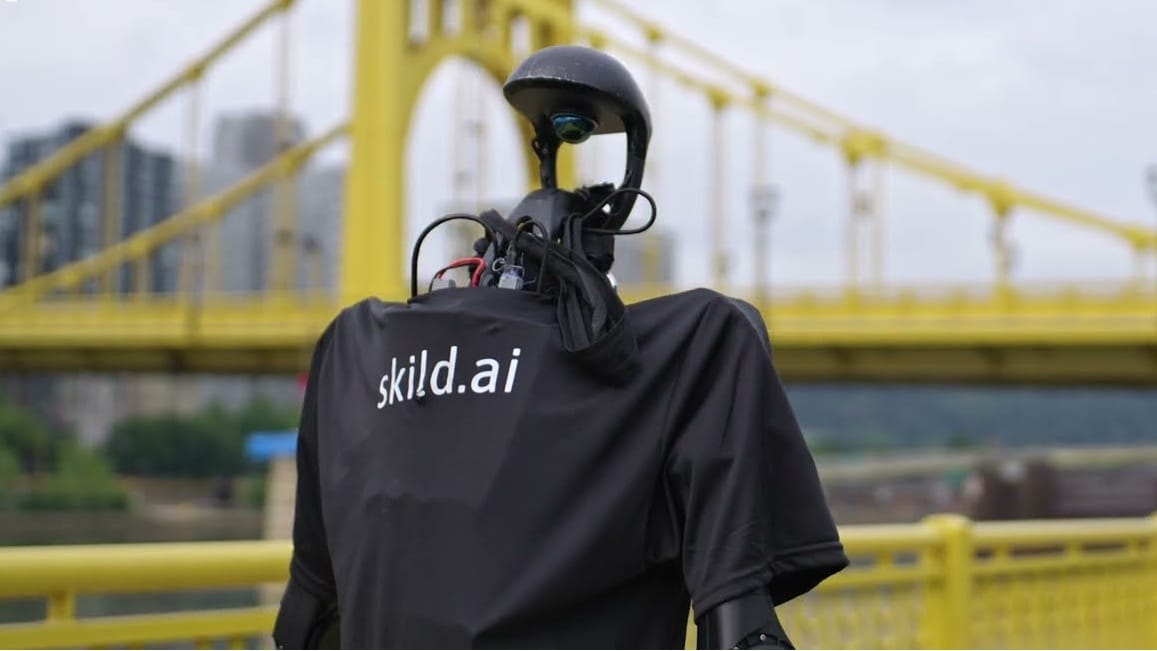
Image source: Skild AI
The Rundown: SoftBank Group and Nvidia are reportedly in advanced talks to lead a massive round in Skild AI, a startup developing a foundational AI model for robotics. The deal, if closed, will triple the company’s valuation to nearly $14B.
The details:
Reuters reports that SoftBank and Nvidia are negotiating a $1B+ investment that would put Skild AI among the best-funded embodied AI startups.
Skild is building a general-purpose robotics “brain” designed to control many robot types, from robot arms to humanoids, not just a single bespoke platform.
Founded in 2023 by Carnegie Mellon’s Deepak Pathak and Abhinav Gupta, Skild has raised hundreds of millions of dollars, including a $300M Series A.
That capital is going into training its omni-bodied “Skild Brain” on massive datasets powered by NVIDIA’s simulation and AI stack.
Why it matters: Skild is racing to solve robotics’ holy grail — a universal AI brain that works across any hardware — while rivals like Physical Intelligence and Figure pursue similar moonshots. The bet reflects growing belief that foundation models can break robots out of narrow, task-specific applications and into general-purpose deployment.
TETHER/GENERATIVE BIONICS
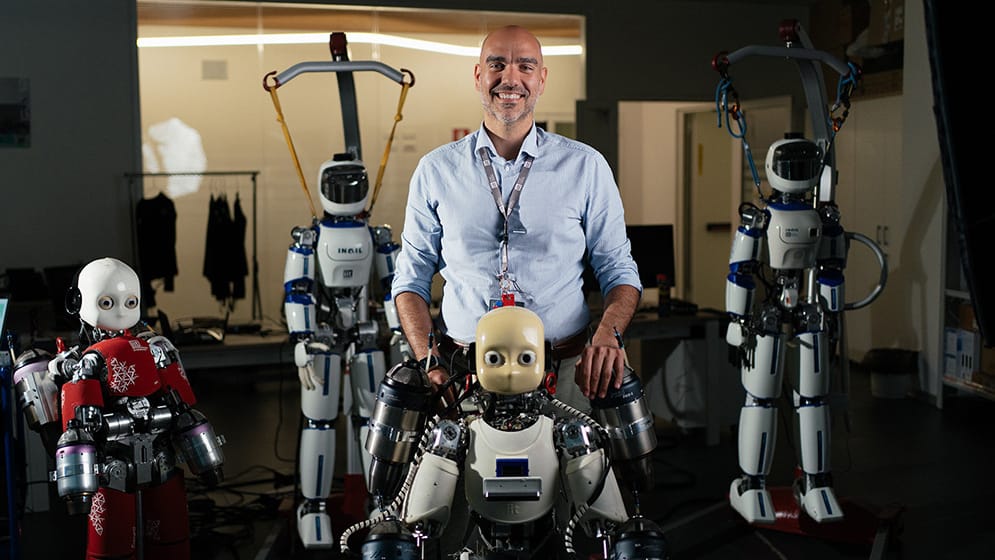
Image source: Generative Bionics (Daniele Pucci, CEO and co-founder)
The Rundown: Stablecoin heavyweight Tether is muscling into the humanoid race with an investment in Generative Bionics, an Italian startup building next-gen bipedal machines in the mold of Tesla and Nvidia-backed efforts.
The details:
Tether is investing in Genoa-based startup Generative Bionics as part of a €70M ($81M) round to build humanoids designed for real industrial work.
The funding will also help the startup build its first production facility ahead of planned deployments as soon as 2026.
For Tether, the deal adds robotics to a growing portfolio that already spans AI data centers, media platforms, agriculture, and brain-computer interfaces.
Launched in 2024, Generative Bionics emerged from the Italian Institute of Technology, where researchers built more than 60 humanoid prototypes.
Why it matters: Tether is backing Generative Bionics’ plan to deploy humanoids in warehouses, factories, and defense-adjacent sites by 2026 — a timeline that puts the startup on a collision course with better-known players like Figure. The company plans to unveil its first ‘complete’ humanoid at CES in Las Vegas.
PICKLE ROBOT COMPANY
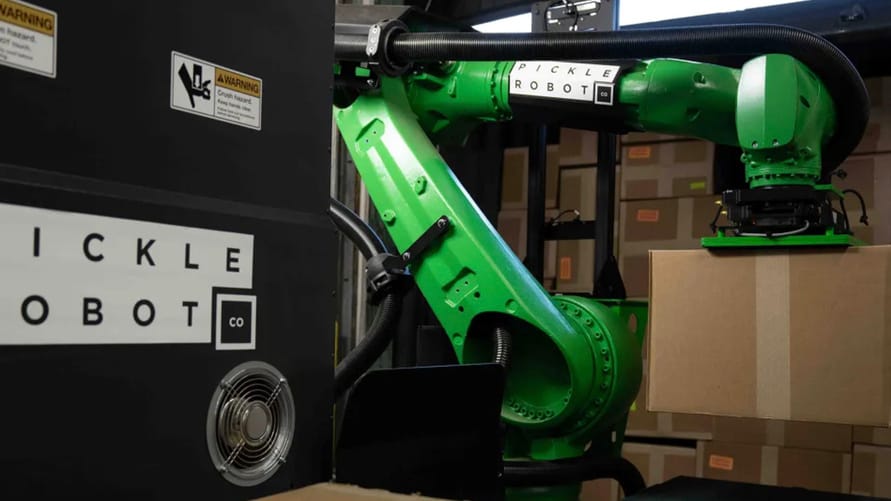
Image source: Pickle Robot Company
The Rundown: MIT alumni-founded Pickle Robot Company is automating the warehouse’s worst job — unloading trailers at breakneck speed. Its pneumatic-suction arms move 1,600 boxes per hour, clearing 75K pounds of cargo.
The details:
The Boston-area startup builds one-armed, AI-enabled robots that roll into truck trailers, grab boxes up to 50 lb., and feed them onto conveyor belts.
Their systems use cameras, depth sensors, and AI-powered perception to understand messy, floor-loaded trailers for maximum efficiency.
Instead of redesigning warehouses from scratch, Pickle’s aim is “drop-in” automation that works with existing infrastructure and software.
Pickle says its robots are already working with major customers, including UPS, Yusen Logistics, and Randa Apparel.
Why it matters: Pickle is one of several startups — including Contoro, Boston Dynamics, and Dexterity — racing to automate trailer unloading, but claims to move twice as fast as rivals. They also just raised $50M to build a software platform that can plug into third-party hardware, including humanoids and autonomous forklifts.
DRONES
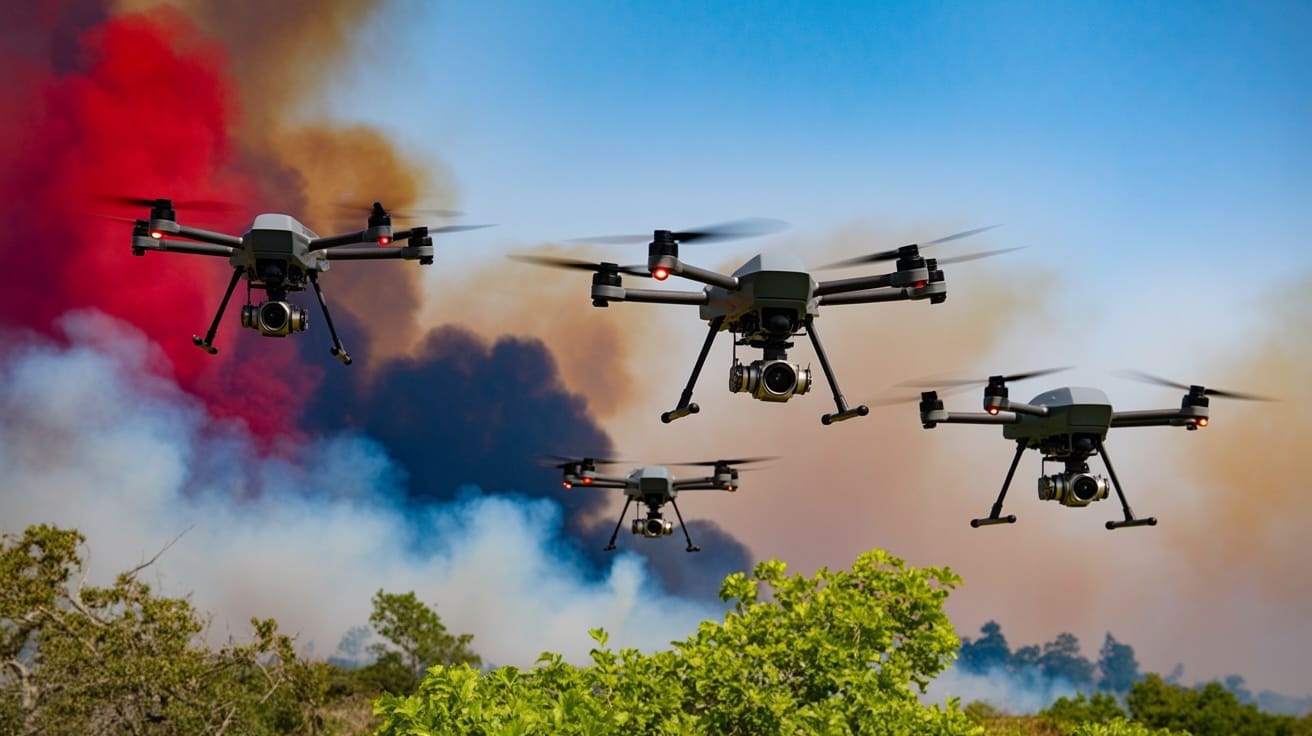
Image source: Ideogram / The Rundown
The Rundown: Ukraine is moving beyond kamikaze drones to battlefield swarms where one soldier commands dozens of autonomous units at once, according to Ukrainian defense tech firm Ark Robotics — a shift that could redefine modern warfare.
The details:
Ark Robotics CEO, Achi, told Business Insider that future warfare hinges on flipping to one pilot commanding drone swarms — for “total drone warfare.”
He argued that one-operator-per-drone systems cannot scale because you can ramp drone production far faster than you can train and field pilots.
Ark Robotics says it’s developing Frontier, a system designed to coordinate thousands of aerial drones and ground robots with minimal human oversight.
Officials across Europe, including Sweden’s defense minister, are exploring tech that could let a single soldier autonomously control up to 100 drones.
Why it matters: Ukraine is banking on autonomous drone swarms to counter Russia’s sheer numbers, accelerating a shift toward warfare with minimal human oversight — something NATO is watching closely. The promise is a new battlefield economy, but for now, true large-scale autonomous swarms remain theory, not practice.
QUICK HITS
Tesla Optimus toppled backward mid-demo at a Miami event, seemingly mirroring a teleoperator removing a VR headset — a moment that quickly went viral online.
South Korea launched a $102B fund to spur investment in high-tech sectors such as AI and robotics.
Samsung, which refreshed its adorable Ballie home robot design two years ago and promised a launch before the end of 2025, has now officially delayed the rollout.
MIT and Stanford researchers built plant-inspired “robo-tendrils” that curl, tighten, and lift with enough finesse to grip both fragile glass and heavy watermelons.
Texas A&M engineering students designed a robotic dog that uses voice commands, AI, and cameras to map, remember, and recognize its surroundings.
A new study describes a hybrid robot that rolls like tumbleweed but can also switch on quadcopter-style control, making ground exploration much more energy-efficient.
Mercado Libre, Latin America’s leading e-commerce and fintech platform, signed a deal to deploy Agility Robotics’ Digit humanoids at its San Antonio, Texas, facility.
NASA picked Lunar Outpost’s Mobile Autonomous Prospecting Platform (MAPP) to be the first robotic rover to work alongside astronauts on the moon.
COMMUNITY
Read our last AI newsletter: Open-source AI crushes elite math exam
Read our last Tech newsletter: Neuralink co-founder’s wild next act
Read our last Robotics newsletter: Trump’s next big move: robots
Today’s AI tool guide: Fix and ship from Slack with Claude Code
RSVP to next workshop @ 4PM EST Friday: AI Automations Made Simple
That's it for today!Before you go we'd love to know what you thought of today's newsletter to help us improve The Rundown experience for you. |
See you soon,
Rowan, Jennifer, and Joey—The Rundown’s editorial team